I’m writing this hours after the Winter Solstice, cozy under blankets on the couch, the room lit by warm holiday lights. As always on this day I’m thinking about what it means to know that daylight will last a little longer every day until Summer Solstice, but the weather will get colder before the change in light seems to make a difference. I consider what seeds I’ll plant–botanical and metaphorical–and which will grow and thrive.
Not all seeds make it. Not all plans succeed.
“The grey of winter falls on us – How will our garden grow ? Will all the seeds we’ve sown Survive beneath the snow ?” – All About Eve, Wildflowers
I used to sing an a capella version of this song to close out The Violet Dawning sets. I think it sums up my feelings about this season well, despite being about a relationship. The uncertainty, the knowledge that growth or retreat can change everything and that’s natural but painful…but eventually there will be flowers. The sun will return, and even if everything’s different, change can bring beauty.
So what seeds am I considering?
I think it’s important to bring up my Word of the Year in this discussion because it expresses well what I’m looking to embrace in 2026 and beyond, if possible.
I chose EMBODIED as my Word of the Year. If you’re on my mailing list, you’ve read about this, but I’ll share it here too, both as a public record of my choice and an explanation.
What do I mean when I say “embodied?” There are a couple of ways to look at it, and I embrace them all. From the concept of embodied cognition:
“By using the term embodied we mean to highlight two points: first that cognition depends upon the kinds of experience that come from having a body with various sensorimotor capacities, and second, that these individual sensorimotor capacities are themselves embedded in a more encompassing biological, psychological and cultural context.” — The Embodied Mind: Cognitive Science and Human Experience by Francisco J. Varela, Evan Thompson, and Eleanor Rosch, pages 172–173.
[Check out the Wikipedia article on this for a good overview.]
Embodied can also be defined as being the representative of a quality, or an idea. A good example would be referring to a dancer as the embodiment of grace. Or: to give body to a spirit, incarnate.
I want to be more present in my body, and experience more of the world through my body. Being ill has kept me away from being one with my senses like that as much as I’d like and my goal in 2026 is to change that, to the best of my ability. I also want to be even more in tune and aligned with my ethics and goals, in every way possible. I think I do a fairly good job of that but I know there’s always room to improve. And—I think the third meaning supports the first. I want to be a better home to my own spirit. I spend a lot of time feeling like a brain in a jar and I need to find a way to incorporate and incarnate my mind into my body so once again we are one.
I think some people with chronic illnesses might relate to this goal in some way or another.
What I want is to be more present, grounded, and ALIVE.
My plan is to be more intentional in what choices I make as far as going out, expending energy, choosing projects. I want to have more nature walks and visiting places that give me joy, because a lot of my life currently is spent in places not of my choosing. My living room is quite pleasant but I don’t want it to be my entire world. I need to visit doctors but it would be great to balance that with indie bookstores and farmers markets.
And I miss some of the creative pursuits that I used to enjoy, too. Spinning yarn, weaving, photography–those have all taken a back seat to just surviving, and using what energy’s left to write. I love writing with all my heart but I need other experiences in order to keep that writing fresh and lively.
Taking stock is important.
I don’t do resolutions. I don’t like the baggage around that word and concept. What I do enjoy is looking over my past year and taking stock of what successes I had and unfulfilled wishes I can move to next year or release. I’ll post that once I’ve compiled it, don’t worry. I think part of the process is showing that even in slower years, a lot happened!
In the span between now and the end of the year falls Christmas, my birthday, and New Years Eve. That’s a lot of time to review and assess. Look for another post talking about my numbers, conclusions, and what to look for in 2026 from me. Until then I hope that whatever you celebrate that it’s a lovely and restful and comforting time.
Once again, I’m blown away by the support of readers for my work: THANK YOU. I was just notified that A Third Kind of Madness was nominated for a GIANT list of categories in the 2025 WriteHive Indie Ink Awards.
Best book cover and cover artist
Best friendship
Best light read
Best morally gray character
This Book Made Me Hungry/Thirsty
Wittiest character, Writing the Future We Need: Bisexual or Biromantic Representation
Writing the Future We Need: Gay or Lesbian Representation
Writing the Future We Need: LGBTQ+ Representation
Writing the Future We Need: Mental Health Representation
Writing the Future We Need: Trans or Nonbinary Representation
What I’m most proud of are the Writing the Future We Need nominations. Thank you for seeing me, my story, and my characters so well.
The House of Three Ravens and the Fae Council Present: Feed People, Get Books 2025
Here in the US, things have rapidly descended into a dangerous time to be disadvantaged or living in a difficult situation. The most vulnerable sections of people living here are the ones being used as political pawns with no regard to their safety or ability to thrive. As it stands currently, many people are in danger of losing the government support they depend on, especially SNAP benefits. Food banks and other places that distribute food to those in need are going to have to work hard to take up the slack, and they need our help to do so.
I know many of us are struggling.
But even a small donation to your local food bank can help–many small donations add up! I want to help encourage folks to donate and also to give them a small reward for their kindness. Even though knowing that you’re helping in some way is a reward all on its own, I think that having something connected to that experience makes it even more meaningful.
Also, as someone who has been unhoused and struggled with finding a regular meal in the past, this is an important cause to me. The generosity of others has kept me alive. I wanted a way to express my gratitude, by paying it forward in a way that was possible for me: offering my stories of hope, found family, and redemption.
I wish that I could send everyone print copies of my books, but money and logistics makes that impossible. Instead, here are the e-book versions of my stories, with some extras as well. They are DRM-free, so you’ll own them forever.
All I need for you to do is fill out the form I’m going to link, including a receipt showing your donation, and I’ll send you a link to download your book[s]. You can block/blur any personal info other than your name and where you donated; I just need it for verification!
The deal is: every $5 gets a free e-book. $15 gets you all three. Plus I’ll include the short story Escaping The Dreamland.
Donate over that? Leave a comment on the form and we’ll talk about other fun things I can create for you. Want to be a named side character in one of my stories? Curious about Fae recipes? Need to pick a writer’s brain about writing or indie publishing? We can make these things happen.
My optimism comes from a strange and twisted place, I suspect. I took “it could always be worse” and lived through it multiple times, defiantly wielding the phrase against yet another disaster in my life, over and over.
No matter how “worse” things got, I hung on, looking to the knowledge that things have been better to get me through those times. And there was always farther I could fall, so for now, this was tolerable.
“It could always be worse” inherently implies “Things have been better and could be again.”
Usually, the worst I could imagine was being dead. Once you’re dead, there’s no chance of redemption or escape from the bad place you’re stuck in. I even said that when I was in the hospital after I did indeed almost die: “How am I? Could be worse! I could not be here!” Doctors and nurses, family and friends all heard me say that in a cheerful voice, because I knew how lucky I’d been. I was thrilled to still be here, even though I was in pain with a giant incision. I was alive, I could recover, and now we had answers to why I’d felt so bad for large swathes of my life. You bet I was cheerful.
After that, being dead was firmly established as rock bottom.
It allowed me to deal with further surgeries, even though I was scared. I had a second intestinal resection and fascial dehiscence repair, both of which were a lot harder than my first surgery in some ways. I wasn’t as strong or as healthy [outside of Crohn’s Disease] for those surgeries as I was for the first surprise surgery for bowel perforation. And I’d gone through a very long recovery from that first surgery–almost a year!–and multiple bacterial infections.
But when I woke up after, in the recovery room, I was grateful and optimistic. I was still here. I got to live.
You have to understand, I have been through a lot of bad things in my life. I’ve been unhoused, and homeless. [they are not the same thing] I’ve been in several abusive relationships. I’ve gone through some of the most traumatic things a person can go through, and still, still I refuse to let that dim my optimism.
I’m still here. Things could be worse.
Now I have accomplished so many of the dreams that I had when I was young, including careers and experiences that people often think are impossible to easily achieve. I managed that with another handy philosophical phrase: “What’s the worst that can happen?”
No one’s died from being told “no, you can’t be a DJ” or “your book sucks.” Luckily I haven’t had those experiences [yet] but I can confidently guarantee that I won’t die if they do. A busted gut didn’t kill me, rejection sure as hell won’t!
A cheating husband didn’t kill me. It shook my faith in myself for a while, but it didn’t take me out. I avoided being taken out by drinking and drugs, thank goodness. [and I’ve been sober for 20 years now!] Depression hasn’t killed me, though it tried really hard a couple of times. Losing jobs, homes, friends, whole eras of my life? They didn’t take me out, either. They all hurt like hell, but I made it through, and had happy times again.
The rise of fascism in the country where I live? That might take me out, eventually. I’m not the first target in their crosshairs, but I’m on the list. I’ve been loud about my opposition, and loud about my support for those who are currently targeted. But I’m still here, still fighting for others who are in the crosshairs before me, and I will do that until they manage to kill me.
I’m still here. I’m still loud about that. I’m loud about others not being as lucky–and that’s what it is, if I’m honest, luck–and I will continue to draw attention to the things our government would rather we were silent and accepting about. That’s not going to happen. They’ll have to kill me to get me to shut up.
And even still, my optimism that we can have a better world keeps me going. At this point, it’s not for me. It’s for the people who will be here when I’m gone, especially those who have had less privilege and luck than me. I want it for the children of the people who barely had chances to get ahead, who had to fight against racial prejudice and the systemic reinforcements that stem from that prejudice in every corner of their lives. I doubt I’ll see it change in my lifetime; in theory I probably only have another twenty years or so. That’s a sobering thought, but also one that lights a fire under me to do my best to reinforce the optimism I carry with concrete action.
If you have more projected time than I do, you have more time to work toward that goal. What are you doing with that time?
So yes, I’m an optimist. It’s my fuel for going forward, for doing my best to push for positive change in these times for future generations, ones I’ll never see. That’s the difference between someone like me and those in power right now, who only look to fill their pockets and their soul with pleasures of the moment, no matter the cost to others.
We have to use that optimism to envision a better world and also to work for it. Otherwise we’re just pacifying ourselves. Otherwise, you might as well just sink down into despair, because what’s the difference at that point?
You have multiple books/stories in your Eleriannan series! It’s not clear to me how this works; can you help?”
You bet I can!
Let me break it down for you, with lots of details about what each story is and where it falls in the timeline.
First thing you need to know is that all the stories can be read independently from each other. There are no cliffhangers, but reading them out of order will reveal some plot points from previous stories, so be aware. I’ve tried very hard to make sure that you won’t feel lost if you read them out of publication or chronological order.
As of October 2025 are currently these titles:
Escaping the Dreamland [#.5]
Events happen well before ISYK
Tells the story of how Aisling came to be, 1st person
Short story
Available with subscription to my mailing list
In Sleep You Know, A Story of the Eleriannan [#1]
First in the series
Introduces you to many of the characters
Told mostly following Merrick, 3rd person
Draws inspiration from various Faerie mythologies and folklore as well as Child Ballads
Novel length, stands alone
Set in a, um, slightly different version of Baltimore
Soundtrack
Cast a Shadow of Doubt, Stories of the Eleriannan [#2]
Second in series
Tells the stories of Lucee’s rise to leadership and Camlin’s attempt at redemption
Introduces the Mealladhan and Emmaline
3rd person, mostly following Lucee
Features more Baltimore culture, including big summer art festivals
Novel length, stands alone but is even better paired with ISYK
Soundtrack
A Third Kind of Madness, A Story of the Eleriannan [#3]
Third in series
Introduces Denny and Peri as well as Denny’s art collective, the Ants, and new Elementals
1st person, told through Denny
If you’re a fan of Karsten, they are a prominent character
Art scene, farmers markets, and the Mount Vernon neighborhood are featured
Novel length, stands alone
Soundtrack
Coming in 2026:
Eleriannan #4 [as yet untitled]
Fourth in series
Centers on Emmaline and her struggle to integrate into The Grimshaw while discovering the depths of her powers
Introduces some new Grimshaw characters, especially some of the Arswyd and Ettir, an Eoten
3rd person, mostly following Emmaline
Want to find out why the ArDonnath are so nasty? Here’s your chance!
Novel length
Soundtrack
If you have further questions about any of the Eleriannan books, you can always ask here! Also check out the Fae Directory and my series The Magic Between Us for more insight about the characters and how they interact with each other.
I should probably mention that I have an unrelated book that is also set in Baltimore coming out in 2026. It’s a speculative fiction near-future story called A Small Light in the Darkness, and it focuses on two characters:
Tryst, a lonely and longing poetic soul who can’t seem to make a “true” connection with someone who can satisfy her longing for something deeper
Fo, mysterious and thoughtful with a multitude of secrets and a deep need to connect even though they are scared of the emotions that brings
Together, they unravel the unknown aspects of Fo’s past, revealing a terrible accident with an experiment gone wrong, the drawbacks of mind enhancement, and a secret that goes much deeper and darker than either of them had imagined at the start.
Recommended if you like stories about transhumanism, and/or with human-computer interaction, romantic subplots, connecting with strangers, poetic prose, science gone bad.
Using one’s body to work through trauma, stress, and challenges is a valid therapy. Some people run or hike. Some people work out, lifting weights. I like doing that, too. Some people play sports, or swim.
I dance.
I’ve been dancing since I was tiny. I took ballet and tap classes while we could afford them, and even after I had to stop, I continued on with my exercises, and I made my own cute little choreographies, too. Body movement was an important was for me to work through anger and frustration and other big feelings, and to express joy, too. And dance let me feel like I was inside the music I chose, in a different way than singing did.
In high school I was part of a dance troupe, where we choreographed dances to pop songs and would perform them anywhere possible at the drop of a hat. That was when Michael Jackson’s Thriller was big, and we learned that dance and would dress up and perform for parties and the like. It was a ton of fun, and when it was time to go off to college, I continued my dance studies. I took modern dance and ballet. I knew ballet wasn’t a serious option for moving forward but it’s a great foundation for movement and control. I glowed when my teacher told me I had “great feet” because I’d worked hard on keeping my basics.
Dance got me through the hard parts of those times. It kept demons at bay growing up, or at least it tried; it gave me a way to control a tiny part of a life that was spiraling out of control while I watched everything crash down around me in college. When I discovered dance clubs, and then the all-night members-only fallen paradise that was my Friday night retreat, I finally felt like I could dance some of the pain and trauma out of my body, casting spells on the disco light illuminated floor with my feet as my arms traced out graceful symbols. I would stay until the sun rose, blinking in the bright light before wandering off with all my other dusty-black clothed friends in search of breakfast.
I’ve been chasing that feeling ever since.
I haunted various goth/industrial/synth oriented club nights for a while, then became the caretaker of one as well as a DJ, traveling to some of the clubs that I’d participated in as an attendee before I was able to add to the magic myself. I was known as a “floor starter,” someone who wouldn’t hesitate to get out there all by myself to dance–and often helping to draw other people to the floor as well. I generally have no shame when it comes to art, and dancing is a lot of things but most definitely is an art. You don’t have to be fancy to dance well, but you do have to let yourself express the music without worrying what you look like. Losing yourself in the tune, the rhythm, the vibe: that’s when you’re at your best as a dancer. I conveyed the joy of moving to the music in a way that drew other people to join me. That’s also a form of magic. Curating the music, creating the vibe, inviting others to join: alchemy.
I make music. I’ve always sang, always danced, always been entranced by what music brings to us. It’s a form of connection, creation, expression, communication. I want to lose myself in it; I want to offer myself up to it. I want to feel it move through me and move my body, not in possession but in partnership.
When I’m in my body like that, I’m fully in my mind too.
Dancing puts me in a kind of trance but it’s not an out-of-body experience, it’s being as at-one with my body as I could possibly be. My brain benefits from those moments, becoming refreshed, then inspired. It’s why one of the most common pieces of advice that I give writers that are dealing with creative blocks is to get up and dance, or chair dance if that’s not an option. Pick music that demands that you connect your body to it and let it lead you out of your blocked place and into something fresh and energized.
This is why all my books have soundtracks, by the way. I use that music to put me into the mood, to define the vibe of the chapter I’ve associated it with, and to express that energy to the reader. Music is shorthand for emotion and by sharing it, I’m offering you mental insight into the scene that might already be expressed in words but is always heightened by the inclusion of the tune that helped shape it.
Now if you don’t mind me, I’m going to turn on my tiny disco lights and move across the room to some beautiful songs.
This post is part of The Magic Between Us series, an exploration and analysis of characters in the Stories of the Eleriannan series.
The most interesting and confusing question I’ve received about In Sleep You Know is “why did you choose a male lead for this story?” I’m not sure if it’s that people expected me to only write about women, or if it’s a genre assumption that main characters in urban/contemporary fantasy tend to be female, but when have I ever followed convention anyway?
Look, one of my goals is to tell magical stories about the kind of people I know and understand and that the general public might not think of as “magical.” I’ve also said many times that I don’t pick the characters, they choose me. Merrick Moore showed up early on when I was dreaming up the Eleriannan series with a different name and a slightly different trajectory, but he established himself quickly as the kind, sometimes clever/sometimes clueless, going-nowhere musician that we know today. Merrick’s a reluctant hero, which is a trope I find pretty realistic–I mean, it’s one thing to believe in magic happening in front of you when you’re at a party and everyone’s acting weird but they’re beautiful and dazzling and maybe you’re caught up in the moment so you go along with it. It’s another entirely when you’re back at home, hung over and with a new tattoo that you don’t remember getting and then you realize you’ve lost a bunch of days and…well, you start to feel stupid about how it all went down and you bought into it.
Still, there’s a part of you that hopes–and fears–it was all real.
At the character’s core, Merrick’s a confused, easy-going, uninspired guy who never wanted much of anything in life before the moment he crashed a [unbeknownst to him] Fae party. When he’s offered a chance to be more, to do important things, he balks. The only passion he ever had was to be in a band but even that hadn’t gone much of anywhere. That’s why it’s important that his first success after accepting his fate with the Eleriannan is to pull off The Drawback’s first real show–and exercise a little magic while doing so. It wakens possibility in Merrick’s mind, and a new sense of motivation. Suddenly, he sees what magic can do and he’s found a purpose, and that feels good to him. He feels alive for once, instead of just phoning in his life.
Some important background about Merrick comes out in Cast a Shadow of Doubt: although he comes from a more privileged background than some of the other mortal characters, he’s also suffered from neglect. His parents are well-off so Merrick never wanted for material things, like Vali for example, but he was basically ignored, left to his own devices, and never expected to do anything beyond go to college. Money from his parents is how he’s stayed afloat, but they don’t have interest in him beyond that. His bond with Lucee is strong in part because he sees her as his only real family, a sister from different parents. He’s shown to have taken care of her many times, especially when they were growing up and her family tried to control her and shape her into something she didn’t want to be. The contrast between them is stark. Merrick is the privileged guy left to waste his life because no one expected more from him and couldn’t be bothered to put any effort into him; Lucee’s the legacy academic who was continually forced down paths not of her choosing, even though she had all the drive and vision she needed to achieve anything she desired.
Merrick’s friendship with Lucee is crucial to his growth.
She’s the one who pushes him to reconnect with the Eleriannan, and she stands firmly behind him when he becomes the champion of the Fae. She steadfastly believes that he can succeed, seeing his potential and believing in it more than any of his actual family ever did. In return, Merrick has supported Lucee’s dreams to be a musician, giving her space to be herself when her parents would not.
It’s worth noting that almost every person who encourages Merrick to take on this new role is a woman. Aisling, Fallon, Lucee–this trio provides the gateway for Merrick’s change into a responsible person with a mission. And The Ladies are the challenge that proves he’s worthy to take on the mantle; besting them and forcing them to give him their names shows that he has the strength of mind to be a champion. All the keys to Merrick’s success come through these women, and he acknowledges this readily, and does his best to repay their support by doing the same for them.
It’s also important to note that he doesn’t end up being the leader of the Eleriannan–that’s Lucee. He’s a great champion but he never once thinks of becoming more than that, and it’s not because of the lack of drive he once had. It’s because he understands that he’s finally in a place that suits him–and leadership is the role that suits Lucee best.
Some interesting things about Merrick that might get missed by the reader:
He didn’t really care about academics but he was a decent scholar and that helps him several times in his dealings with the Eleriannan.
Similarly, his politeness gets him through uncomfortable or uncertain situations. He learned early on that much can be excused if it’s done with manners, and uses that to navigate the unclear social mores of the Fae.
Despite his easy-going nature and outward appearance of being fine after the big battle for The Maithe, he’s still traumatized by what happened, especially by the fight with Camlin.
His connection with Aisling at the beginning of the book is a callback to several versions of the “faerie lover” story, where a mortal [man, usually] falls for a faerie [woman, sometimes a faerie “queen”] and she brings him into her world, revealing magics to him–for a price. In Merrick’s case, that’s joining them for seven years in exchange for Fae gifts.
Cullen [who with Aisling is one of the first Fae to befriend Merrick] recognizes Merrick’s potential and in doing so, is slowly awakened to recognize his own ignored potential. Merrick has a track record of inspiring these kinds of revelations in those around him–like what happens when he goes to talk with the Gwyliannan.
Merrick’s connection and then love for Aisling breaks a curse and create great changes in her life and status.
I think the most important thing about Merrick is that he’s an example of how any of us, even if we’ve never had a heroic day in our lives, can become someone important and game-changing, if only we find the means to believe that we can. For him, it takes other people seeing in him what he could not, but that magic was always there. He just needed to take a chance and do something outside of the norm in order to discover it.
This post is part of The Magic Between Us series, an exploration and analysis of characters in the Stories of the Eleriannan series.
Vali Dawe is the kind of person who is easy to befriend and even understand, but knowing her? There are depths to Vali. She’s got a complicated and traumatic past and carries a lot of pain, which she’s worked hard to turn into lessons she can use to help others. If there’s one word I’d use to describe Vali, it’s compassionate. She’s the conscience of the Eleriannan: always looking for the kindest and most helpful options for her Fae family to choose from. Together with Lucee Fearney, who I would call the heart of the Eleriannan, she’s worked hard to create a culture of acceptance, cooperation, and good works using the power of the Fae.
It’s no wonder that the Heart of the City chose her to be their representative. Vali is a living embodiment of what community can and should look like. Because of her past, she’s uniquely positioned in the Eleriannan to relate to injustice and need in Baltimore from a place of deep empathy and understanding.
Vali grew up in the foster system, and her experience of it was either benign neglect or active abuse. She acknowledges that not everyone has a bad fostering experience, but hers reflected some of the worse outcomes and that she was viewed as an inconvenience at best and a punching bag and cheap labor at worst. Her mother abandoned her and her father is unknown to her, which is probably where her Fae blood comes from, but that’s unverified. She was completely unaware of her powers before she met Sousa, thinking that she was just extraordinarily lucky at not being seen when she didn’t want to be. Little did she know!
After foster care Vali lost any of the support systems she’d been able to access, and found herself unhoused and on her own. That’s when she built up her street connections, befriending other homeless folk and learning their stories. Some of them gave her tips for staying safe and finding suitable places to camp, as well as ways to make her life run more smoothly. That’s what led her to return that assistance once she had some security, like setting up the ability for her pal Jimmy to have an address where he could receive his disability checks.
When I started writing about Vali’s life, this wasn’t something I just pulled out of thin air because I wanted a character with this background, though she does add a grounding element to all the magic happening in the story. Vali’s experiences are rooted in some of my own; I’ve been unhoused several times in my life, with various different experiences of being houseless to draw from. I’ve slept on the street, and I’ve bounced from couch to couch, and even camped in my office. All of those were different aspects of the same thing, with shared and differing challenges and advantages. They all share the same feelings, though: worrying about being a burden, shame, anxiety, frustration, hopelessness. Like Vali, I worked hard to not let them take over my usually sunny personality, believing that this too shall pass and at least I could try to make things as positive as I could.
It was important to me to humanize and present a relatable face to being unhoused, and Vali gives voice to many of the things she learned in her time of being homeless, including relating to others in the community of unhoused folk. She’s often pointing out why things don’t work the way that the general public assumes–like assistance programs or even why people end up unhoused–and how meaningful changes won’t happen until those in charge actually work with that population, not just for them.
Vali’s also the advocate for taking action over just talking about how to fix problems, and is often volunteering on neighborhood clean up crews, waterway trash removal parties, and free feeding events like Food Not Bombs. She’s managed to rope some of the other Eleriannan into helping, too, with Sousa being one of the most enthusiastic participants. She can be counted on to have a nuanced take on most any community-action-oriented project, offering balanced praise and criticism as warranted.
Her most valuable skill at The Maithe isn’t her ability to work graffiti magic, although she’s used it plenty of times to help. [See: the locking tags for the front door and on the Gates, Camlin’s “tattoos”] It’s the way she sees through to the root of a situation, and how readily she gives people the space to make the right decisions. Even when Camlin, the man who had tried to seize The Maithe from Sousa, had held her hostage, and who almost killed Merrick showed up at her door, she didn’t immediately turn him away. She didn’t react from her emotions. She took a moment to assess the situation and then acted in the way that made the most sense, even while knowing others wouldn’t agree. She also insisted that Sousa re-examine his feelings about Camlin and how he wanted to proceed, knowing that doing so risked hurting her own relationship with Souz. Her calm advocacy for being kind and doing what needs to be done to help in times of crisis, aside from any personal feelings, is a hallmark of who she is as a person.
Having gone through terrible, challenging times doesn’t have to harden a person. That’s what Vali represents. She’s used her trials to motivate her, to make sure that she does the best she can to help others who have been put into impossible situations in whatever way is best for them and is of their choosing.
In this current time, when the US is moving to once again criminalize homelessness as part of our descent into a fascistic hellscape, it’s important to do our best to speak up and show up for those who will be affected by this shift. Most people are one paycheck away from becoming unhoused. ONE. Even if you don’t think this could ever be you [it could! it was me!] Vali would tell you that how we treat those with less than us reflects on all of us. Also: it takes nothing to be kind.
The general advice given to people talking on the Internet, especially people with any kind of platform, is to keep personal posts to a minimum, or at least keep details deeply obscured.
Well, fuck that, my friends.
Today we’re here to talk about being a creative person in this crumbling empire that’s morphing into a New Dark Age and how it’s wreaking havoc on those of us who are the “sensitive artist” type – which is a term often used to besmirch and belittle us, because sensitive = emotions, don’cha know, and that means WEAK.
First off: artists, writers, musicians, and every other type of creative person are some of the strongest and most observant people out there. We have to be. You can’t be weak and keep going down a road that almost never pays off in any supportive or sustaining way. Art is drawn from observation and feeling things deeply, in a way that allows us to reflect those feelings back to others and touch their hearts in turn. Sensitivity is our superpower and although it can hinder us in other ways, the one that affects us the most is how some people weaponize it against us.
We feel deeply, and that’s dangerous to those who want to desensitize the world for their own purposes [aka fascism; if I have to explain this you’re not paying attention]. Fascist leaning governments always move to control the Arts first; if Art wasn’t powerful, why would they bother?
So because I can only speak authoritatively about my own experiences and feelings, I’m here to talk about my state of mind right now.
…it’s hard to create while my country takes a hard shift to the right. [There’s a whole conversation about how far to the right we were before this but that’s for another time; please recognize that I am simplifying things here for flow of conversation and yes I know things have been fucked up for quite a while, just with an obscuring bandaid on for some more privileged parts of the population] Other countries have been following suit in various ways; I know my woes are shared.
Having an existential crisis in the midst of an even bigger crisis seems…trite, inconsequential.
But it’s normal, friends. Existential crises are triggered by big life shifts, trauma, and other major life events. In this case one could argue that we’re going through a polycrisis – “a cluster of related global risks with compounding effects, such that the overall impact exceeds the sum of each part.” Of course that’s going to trigger deep introspection and personal feelings. I know that I feel helpless and powerless right now. It’s causing me to examine every part of my life and who I am, because that’s really all I feel like I can control right now. If I’m being honest… even that’s a challenge.
“Take your hand off what you cannot control, and get your hands on things you can change. […] The only thing you can control is yourself.” – Min Yoongi
So, to the first part of this discussion: no, it’s not trivial or weak to focus on what you can change in yourself right now.
In my case, I feel like I don’t matter. If I disappeared right now, who would miss me? The list of names of those who would immediately feel an impact is very small. I have a decently sized network of people, but if I stopped posting, would they notice?
I pour my heart into my writing, and into connecting with other people to encourage their creativity. I often feel like I’m shouting into the void, and it’s demoralizing at best. I struggle with feeling worthy, and with anger from that struggle. Again, I think all of this is normal, based on plenty of commentary I’ve seen from much bigger and more well-known authors and artists.
What’s important is what I do with that energy.
Ironically, the only thing you can control is yourself, but you can often work on that through putting your efforts into organizations that help others. Want to feel like what you’re doing is important and useful and meaningful? Help other people.
For me, that’s volunteering, mentoring, and cheerleading.
I’m disabled, and I don’t have a lot of physical energy a lot of the time. As a disabled artist and writer, I’m also very poor, so it’s difficult for me to donate to a lot of causes. But even with my physical constraints, I can lend my brain and connections and time in ways that helps my causes of choice and at the same time, helps me feel less conflicted about who I am and where I’m going. Pick whatever causes make the most sense for you at this time, and do the most good you can with them.
Doing that kind of work helps others, but also it gets you out of your own head, which is part of the whole Existential Crisis problem. I know for me it’s like my brain starts swirling with anxiety and questions until they become a cyclone that drags me into the middle of it, with no route of escape to be seen. That’s a soul-crushing place to get caught, while every question you’ve ever had about your worth and purpose come up to slap you around incessantly. This can break that pattern, and possibly give you new perspective for the questions you have about the direction and meaning of your life. By focusing outwards, we can get the answers we crave for our inner selves.
So what I’ve done lately is step up my mentoring role, and also increase the volunteering work I’m doing. Helping other people to grow keeps me from feeling useless and stagnant, and gives me examples that can assist me in examining my own path. That might not be the answer for you, and that’s okay! But it’s worth noting that it’s a lot harder to dwell on my issues when I’m focusing on helping others. And spending time during my days to find work that others are doing and championing that helps a lot too–and sometimes the favor gets returned, and everyone wins!
I’m not saying this is the answer for everyone. But it’s helped me, and in turn it’s helped others, and that’s a success as far as I’m concerned. You’ll note I haven’t told you where to volunteer, or for what causes. That’s deliberate. Mutual aid and causes that ease the suffering of people are high need options right now; teaching/mentoring/volunteering in your field, donating time or money to programs for BIPOC, LGBTQIA+, disabled folks or another demographic endangered by fascism, marching/protesting, and so many other ways to help are also important. You get to choose. Pick something you can sink your heart into.
I know. Life itself is really hard right now. Everything’s crushing us, including our own brains. It seems impossible to find time/money/energy/wherewithal to do this. Look, I believe in you. I know you can do the thing. Every bit you can do to help other people right now helps all of us. It’s our only ticket to a better everything.
This post is part of The Magic Between Us series, an exploration and analysis of characters in the Stories of the Eleriannan series.
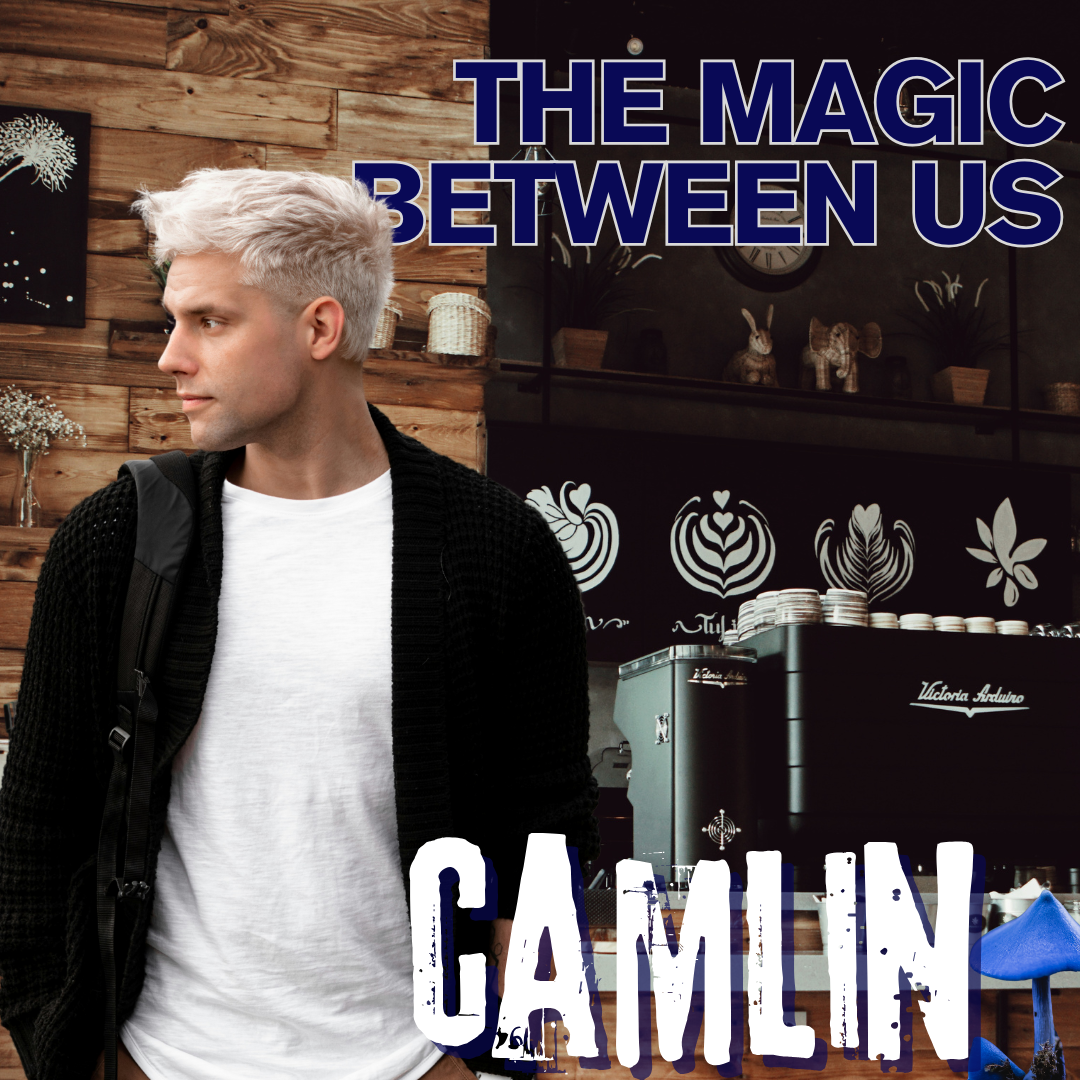
When we first meet Camlin Grimshaw, he is revealed as the villain of In Sleep You Know, the shadowy leader of an aggressive faction of Fae that have named themselves after him. He and his followers have a deep, burning anger that comes from many years of isolation and being othered, both from the mortal world and their own, and that manifests as hatred of the Fae social classes and mortals in general. If they can’t belong, then they’ll seize or destroy the systems that keep them out.
In the course of ISYK we learn that Camlin is skilled at manipulation, and when that doesn’t work, he compels using his mind. He secretly uses members of the Gwyliannan faction as spies and for some of his dirty work, and isn’t above being cruel to those he uses, because in his eyes they’re part of the system he despises. Genaine in particular suffers at his hands, and it’s implied that he draws her into a relationship with and uses that as a way to further twist her to his will.
Camlin is cocky, self-assured, and willing to do anything to achieve his goal of gaining control of The Maithe—or is he? We see several times where his confidence has cracks, and his fear and uncertainty peek through. It’s not until Cast a Shadow of Doubt do we explore this, and his motivations for how he acted, in any detail; in ISYK he’s a bit more mysterious and very unlikeable. He would say that he’s used to playing that role, but the truth is, as always, much more complex.
In CASOD, he first appears at the front door of The Maithe, holding an unconscious mortal, Emmaline, in his arms. He begs the Eleriannan to help her, at whatever cost to him it might incur. This is our first inkling that something has changed for Camlin Grimshaw, though not the extent of it.
Why am I recapping all of this, with potential spoilers? Because to understand what made Camlin who he is, it’s important that we look at his terrible choices and actions before he started down a path to redemption.
Vali says that she believes no one is beyond redemption, which is why she gives Camlin a chance by letting him in the door—even if she doesn’t consciously understand that as the reason at first—and this is his second advocate on the road to turning his life around. The first is Emmaline, who gives him space to be flawed and messy without judgement, which in turn encourages him to care about nurturing over destruction. Until that point in his life, he’d suffered through being feared and reviled by mortals for what he was, a magical anomaly that lacked control over his powers. He was rejected by his Fae father as well, who neglected to teach him how to use his magic properly or even how to blend in for safety, and who eventually left Camlin and his mother to fend for themselves. This was the catalyst of his hatred for mortals and the so-called Gentry; though he still wasn’t quite comfortable with the “lower class” Fae, they didn’t judge him for being a half-blood like the Gentry did.
Neither Vali nor Emmaline excuse Camlin for what he’s done. Vali was there and suffered at his hands. She watched her friends suffer as well, unable to aid them. But she’s seen people do terrible things, often when they felt like they had no other choice or when they’d fallen so far that they no longer cared. She tries to meet people where they are, leaving them room to grow and explore the possibility of change. That confuses Camlin at first, because he knows that she has no reason to forgive him. None of the folks that he waged war against do. Being able to accept that he deserves whatever punishment he receives when he offers himself in exchange for helping Emmaline is all Vali needs to hear to give him leeway. In turn, she works to convince the others that they too should consider allowing him a chance to atone for his transgressions.
But it’s Emmaline’s unblinking acceptance of him, terrible faults and all, that sets him on the road to change. When he first encounters her, he’s still leaning on his arrogant persona for an illusion of strength, despite being laid low in the aftermath of ISYK. She sees right through it, same as she sees him while everyone else in the coffee shop does not, and she interacts with him fearlessly—something he had not experienced in a long time. As two people who were living on the fringes of the world, even though for different reasons, they clicked right away.
And when Emmaline scoffed at the idea of trusting people who claimed not to lie, saying that the ones who protested loudest were usually the least truthful, Camlin was desperate enough to keep his connection with her that he acted rashly. He swore to always speak the truth to her. What I don’t say directly in CASOD [though there’s some implication of it] is that this is the first time he’s ever allowed himself to be vulnerable for someone else. It’s a rash but heartfelt decision, and it’s the first step to redemption for Camlin.
He’s given her a way to have some power over him, in a way that levels the field at least a little. For once, he’s more interested in someone else’s comfort and safety than his own.
After the couple come to The Maithe, Camlin begins to share with others the past that damaged him and led him to the terrible choices that he made. And then he reveals his worst secret: in his anger and hatred and despair, he allowed a mysterious entity that whispered half-truths and offered seductive powers under the guise of achieving similar goals to have control over him. In turn, it used him to control the faction he’d gathered. The abuse pattern he’d been a part of was cyclical, and he was both the victim and the abuser, as all too often happens.
The difference for him being that he’s ready to risk himself to set things right, if he can. He makes this choice knowing that he could lose everything, including his life, or possibly worse, his ability to fight the mycelial Mealladhan and regain his free will. Still, he chooses to try. In the process he puts himself completely at the mercy of those he hurt in the past, trusting them to make decisions that could save him or doom at the end of his task. Even when the Mealladhan once again takes control of him, he does his best to protect and warn the people he cares about.
One of the lessons that he learns in all of this that I think sometimes gets overlooked is that he must trust and work with other people in order to have any hope of this plan succeeding. Every bad thing that happens in Camlin’s life is because of being alone, by choice or not. When he begins to lean on others, he grows exponentially.
Camlin is a character I enjoy exploring, because he’s very much not perfect; he’s quite aware of how flawed he is but is willing to do whatever he can to make amends and work toward becoming a better person. Some villains are unredeemable, and there are things one can never come back from. Camlin himself understands that he can never undo what’s been done, and he doesn’t expect to be forgiven. Instead he chooses to make the best of his second chance at life by doing what he can to keep the Mealladhan from regaining power, no matter the cost to himself. That’s fucking brave, and maybe not everyone will agree that it’s enough to be redeemed—Camlin might be on your side there—but I think Vali, the conscience of the Eleriannan, would argue that he deserves some happiness.