Writing

35 posts

A two leaved plant grows from a stack of books. Text reads: growing a plot from a stem

Growing a Plot From a Stem

So last night it started. What, you ask?

The dreams. Dreams about my current story, the characters interacting, the plot and where it’s headed.

When this happens, I know my brain is in full storytelling mode. And this is when the real magic starts to happen for me, because I’ll be thinking through scenes in my head in the shower, while grocery shopping, or eating dinner. It’s so exciting!

When I start writing, I have characters and a vague idea what the story’s about, and not too much else. I let the characters and mood develop and then the plot will reveal where it’s going. If it sounds like I’m kinda hands-off-the-wheel in this process, you’re right. I trust that there’s a plot there, and there always is.

This particular story grew from a stem I’d wrote down years ago. It took that long to get here, but I knew it would bloom when it was ready. Trust!

⬆️ I wrote that earlier today over on Mastodon, and I wanted to expand on it here, because there’s a lot to talk about!

Plots, pants… plants?

I’m sure I’ve mentioned before that in a world of writers that often divide into “plotter” and “pantser” camps, I’m definitely a “planster.” I can hear some of you asking, “What’s the difference?”

Planners are all about drawing up an outline and strongly defining their plot before they get started. They know where they’re headed, they’ve got the map at the ready, and generally the ride is smooth because of all the planning they did before they even started writing the actual tale. There’s a lot to be said for this method because of that.

Pantsers are the total opposite: they sit down and turn loose the ol’ brain on the paper or keyboard. They might have a general idea of where they want to go, or maybe they just metaphorically get in the car and drive around as their heart leads them. It’s basically discovering the story as you go, which is exhilarating but also can lead to frustration if it remains aimless for too long.

Plansters? [I’ve also seen it as plantser] They’re somewhere in the middle, and the degree to which they lean to one side or the other can vary wildly. It’s okay to claim one of the first two titles as your method and still use some techniques from the other, by the way. I think most writers do, again to varying degrees.

The way I create my stories works in this way:

I’m an extremely character-driven writer, so the main character[s] show up first, usually in an opening scene that sets the tone of the story to come. I do a lot of pre-writing in my head, playing out scenarios like I’m telling myself a story, before I ever commit the characters to the page in any way. This way I can see if there’s a viable story to be shared, or if it needs to be shelved for later.

That’s actually what happened with the current WIP, which I’ve been talking about under the acronym ATKOM for now. When it first appeared, the MC was a guy, and someone who had given up on any artistic abilities early on in childhood. Now the MC is non-binary, and a talented photographer. What stayed was the muse love interest and the MC’s extreme shyness and awkwardness. Oh, and the art collective with the unpleasant leader, Joolie. The story’s plot also has gone in a completely different direction than I originally imagined that it would, and I feel it’s much stronger for that.

So I come up with characters, or more properly – they show up, and I put them in a scene and see how they work and what happens. When it gels and feels exciting, I keep going. At this point, I generally have no idea where the story is going. I just let the scenes unroll naturally and explore from there.

Using In Sleep You Know as an example: I knew my opener was Merrick showing up uninvited to a party, which unbeknownst to him was being thrown by a house full of Fae. Classic, right? Lots of possibility in that scene.

I also knew Merrick was a musician, and kind of aimless and unmotivated but clever and resourceful enough when his back was to the wall. Every single thing else happened in the exploratory first chapter without a plan. Aisling showed up with her ability to walk in other people’s dreams, and Cullen, who started out as jaded and just tagging along for a good time but quickly warmed into a likeable guy.

From there, things changed rapidly. When I started writing, there was no Lucee or Sousa or The Maithe, and certainly no Gwyliannan of Tiennan House. Vali showed up all on her own and she and Sousa carved out their own subplot without any conscious input from me! Which really is something, as Vali is one of my favorite characters to date.

What happens next?

So here’s what usually happens after the characters establish themselves and the story starts to get some ideas of what it wants to be. [Yes, I’m anthropomorphizing my stories and characters, but in many ways they really do have lives of their own.]

About 20,000 to 30,000 words in, I sit down and think about character arcs and where I want the story to go. Usually at this point I already have a good idea of what I want, but no matter how I loosely plot out things I always leave room for sudden changes and swerves. These characters will do unexpected things, I tell you! For example, originally I thought Brenna would be the one to show Merrick how to shape a raven, but our small and gentle friend Quillan stepped up instead. He’s another character who I didn’t have plans for but he insisted on being more important than I would have guessed.

Okay, so far I:

  • Imagine some characters
  • Put them in an opening scene with a vague idea of what I want to happen
  • Start writing, letting the characters do their thing
  • If it’s gelling, around 20,000-30,000 words sit down and make a loose outline and character arcs if I haven’t already*

My outlines are basically me sitting down and writing out beats – the important moments that drive the story along – making sure to include key interactions between characters that I want to see happen and why, as well as where plot points might converge or reveal important details. It sounds more complicated than it really is. I mean, here’s the fleshed out beats from the first couple of chapters of ISYK:

  • Merrick goes to House Mirabilis
  • Meets Aisling, she saves him from Edana, Cullen tags along
  • The Ladies go after Merrick, Morgance loses and has to offer name [no one is sure why they go after him so hard]
  • Merrick is introduced to Fallon and she says he is under their protection
  • He joins the party, meets Sheridan, drinks and eats
  • Fallon asks who will stand for him, Aisling, Cullen, and Sheridan say yes
  • Fallon tells him who they are [fae, Eleriannan] and asks him if he will join them for seven years. He says yes.]

Note that I wrote this part of the outline *after* I wrote those chapters. My outline for the last part of the book is a lot more vague:

  • construction of gates so that there can be free movement
  • why does Genaine claim no knowledge of gates
  • who will guard gates
  • what comes from Lucee’s pledge to Genaine [redacted]
  • Vali’s graffiti
  • [redacted]
  • Vali wards The Maithe, Grimshaw attacks in front, they grab [redacted]
  • Tell them that if they surrender The Maithe, [redacted] will not be harmed

So you can see, it’s more about what I know I need or want to cover, less about “this is how it’ll go” – there are even some things in that outline that I didn’t share here that never came to pass. I guess in some alternative timeline, maybe they did?

I’ll tell you the truth here – I didn’t even write this part of the outline until I was at what I knew to be the last third of the book. Right around there everything came to me in a rush, and I knew where the story was going, though the last couple of chapters still shocked the heck out of me. If you’ve read ISYK feel free to message me and ask what the surprises were!

So this is a pretty long post and I’ve got more to say, including tips for managing all the bits and pieces floating around waiting for that outline to corral them, so tune in for Part Two to learn about things like how a planster manages characters over a long arc that isn’t really planned out at all, and how character-driven plots work for me.

Until next time!

What is the Stories of the Eleriannan series about, anyway?

Even with blurbs on the back of novels that aim to get you interested in a book in a couple of short sentences, there’s still so much an author can say about their stories to entice a reader without giving too much away. Since I get asked the question “What is your series about?” all the time, I figured I’d give y’all a little more!

In Sleep You Know

In Sleep You Know is a twist on the classic tale of what happens to a hero who stumbles into Faerie and ends up sworn to them for seven years. Except in this story, our hero Merrick drags the members of his post-punk band along with him and they all find themselves aligned with fae – The Eleriannan – in a fight against forces invested in keeping the city of Baltimore entangled in negativity.

The book addresses ideas like:

  • how stagnant thinking can be seductive
  • motives can be easily misunderstood
  • community is everything, especially found family
  • we are more powerful together than apart

Cast a Shadow of Doubt

Cast a Shadow of Doubt starts a few months after the end of ISYK, and is very much a summer book, where ISYK is an autumn/winter book. Where ISYK focused on Merrick, CASOD is all about Lucee and also Vali, and how they fit into the new connections that the Fae are building. There’s an old adversary and a new one, plus more magical graffiti, friendly tree beings, a big summer arts festival, and encore appearances from fan favorites: the grandmotherly personification of the City and the creepy Ladies, who have more pointy teeth than they probably should.

This book touches on:

  • family trauma that comes from expectations and control
  • impostor syndrome
  • the search to belong and find one’s place
  • a deep debate on forgiveness of those who have hurt you.
Photo: Thomas Willmot on Unsplash

Writing Hope

I’ve said it before, but I’ll put it here too: I write magical books for people with trauma who need to see good in the world. Also: my stories are hopeful stories, filled with magic and people who you care about. My characters are vibrant and relatable, and the thing I hear most often from readers is that they feel like they know them so well, they are like old friends by the end of my books. [What a compliment, let me tell you!]

I also touch on some of my personal interests in my stories. There’s the obvious things like music and performing, street art, coffee and food – but also topics like the unhoused and how they are treated, urban gardens/food deserts and gentrification, and care of waterways and nature spaces in city environments. These are part and parcel of living in an urban space in my mind and I don’t think I could set a story with powerful characters in a city and not address them in some way.

Baltimore is the canvas for my stories and I subtly put a lot of local flavor in, but not so much that it reads like a travel ad! I like the idea that you might recognize the areas I write about if you visited, but also that these stories could happen in your closest city, too. Baltimore’s a complicated place, and I’ll admit that my version of it is maybe a little kinder than reality, but that’s hope too. I love my city and I want the people who live here to succeed, especially the ones who struggle the most and have had the hardest starts. My characters talk about using the power one has to try and make a difference, and that’s my philosophy too.

I’m currently working on the third book in the Eleriannan “universe” – if you’re interested in following along with my progress on that, I suggest giving me a follow on Mastodon or supporting me on Ko-fi. I share updates, behind the scenes snippets, and current soundtracks. I’d love to hear what you think, too!

An overhead sign reads: you're not lost you're here. Text on the image reads embrace, my word of the year. Photo by Eileen Pan at Unsplash

2023 is the Year to Embrace

Every year I choose a word to represent everything I want to embody in the next 365 days. It’s a very personal choice that I share with my readers because one of my superpowers is vulnerability – and sometimes oversharing. If you know me, you know. This year, the word is Embrace.

Also if you know me, and in this sense I mean if you’ve been following me on any platform, you know that 2022 was pretty challenging for me. It’s been a year of setbacks and delays in both my professional and personal lives, with lots of enforced down time. For someone like me, not being able to create or produce is like torture. I just didn’t have the mental capacity or energy to follow through with anything important as I dealt with my increasingly bad health.

Now that I’m [hopefully, knock on wood] through this challenging phase and well into a healing and recovery one, I am looking forward to things that I’ve had to put aside or delay. I’m finally feeling like I can make some plans and fulfill some dreams. I want to begin again to live in an active, rather than passive, way.

Embrace is a noun and a verb

I always take my time to consider fully what the words that I’m considering as representation of my year mean in all definitions. I like nuanced words, words that are playful. Embrace is one of those words to me, as it encompasses a lot of variety in meaning.

The definitions that resonate the most with me, and that I want to add into my life are:

  • to clasp in the arms in affection
  • to accept something willingly
  • to form a ring or circle around
  • to assimilate or incorporate into a body, structure, or system
  • to hold in one’s mind or imagination
  • to address or meet with expressions of friendliness or welcome
  • The process or fact of being received as adequate, valid, or suitable
  • Loving care and protection provided by someone or something
Definitions thanks to Word Hippo

Some of these things are actions I can personally take, and create within myself and my life. Others are ones I want to have happen to me, and I can facilitate making them happen by what I choose to pursue. They relate to my health, or my career, or relationships. I’ll do my best to use this word and its meanings to guide my life for the next year.

Do you choose a Word of the Year? If so, what’s yours for 2023?

hands with pale skin on a laptop keyboard, typing. There are question marks in the air and the text The Big Why.

A Big Why for 2023

I’ve been writing this post about writing stories with hope, and I was about a third of the way through when I stalled out. It isn’t that I don’t have a lot to say about writing hopeful stories, or why I think we need them. It’s just that something more personally important to me took over my brain and insisted that I write about it first. Okay, brain, you win.

I’ve been thinking about the Big Why, as in “Why do you do X thing?” aka “What’s your motivation?” It’s been on my mind for a while, actually, combined with thoughts about legacy and how much fame is enough. It’s all entwined together in my thoughts, so I’ve been pulling at the threads.

I’ll be 56 at the end of the year. Even though I don’t feel old, creeping time and a body dealing with chronic illness have really brought those thoughts to the forefront. A brush with death will really make you question what you’re doing with your life! In my case, I’ve been considering the path I’ve taken and what I want to achieve with it. It comes down to three big questions:

  • What have I done?
  • Where am I going?
  • What will I leave behind?

What I’ve done [so far]

I can’t be mad at the list of things I’ve done so far. It isn’t “distinguished” or “laudable” I suppose, but I managed to achieve so many things I always wanted to do.

I’ve got the ridiculous job list of: performer, musician, DJ [both club and radio], fiber artist, small business owner, writer, teacher of arts, professional cook, barista and coffee roaster, office manager, restaurant manager, occult bookstore/botánica manager, boutique manager, and for a short while… clown. Some of those jobs were things I’d dreamed about doing, like being a DJ and singing in a band.

If you’ve read my books you’ll see many of these jobs come up as things the supporting characters do for a living. Food service in particular is a forgiving occupation and perfect for those who might be considered outsiders. Bar/club jobs, too. They allow musicians, writers, and other creatives a way to make a living, because creative pursuits aren’t generally lucrative until you reach the big time, and sometimes not even then. Those jobs allowed me to pay bills and also look the way I wanted to look, with brightly dyed hair and piercings. These days it’s more accepted, but I had a lot of rejections back in the day thanks to my style alone. As that was something that brought me joy, I didn’t compromise, and found ways to make it work. Those values show up in my characters, too. They believe in who they are and how they want to be seen in the world.

Now I write full time, and I share the stories with the world that I’ve been creating since I knew what a story was. I am not a well-known writer, though I’m making strides in getting my name out there. There are a lot of other writers out there, and although I don’t look at any other creative as competition but rather as a colleague, it does make it a little harder to be seen and noticed. I know that it takes time and hard work to establish oneself. But I do worry that I’ll never get the readership that I’ve dreamed of having. It takes so much labor to get one’s books seen and picked up by anyone!

Where am I going?

Here’s part of what’s been kicking around my brain: what do I expect from this, from being an author? The concept of fame and what it gives – and its toll – have been something I’ve thought deeply about.* I am quite far from being famous right now, and maybe it’s presumptuous of me to even think about being well known in the SFF world, or any other world. I don’t want fame as much as knowing that there are enough people out there enjoying my work that I’ll know that I left at least the smallest ripple on the water. It’s an “I was here, dammit!” but also a “I felt this, and if you did too, I wrote things that will make you feel less alone – did you find them?”

I can’t control how my legacy is finalized. But I can keep doing the things that I do best, and I can keep trying to improve on them. I can continue to share my words and thoughts and encourage others who want to follow the same path that I’m on. I can pay attention to the world around me, especially the parts that are different from the ones I’ve experienced, and talk about them in my stories, and in social media. I can contribute money and time and words to the causes that I think need me.
It’s not any different than what I’m already doing, though.

What else? I can keep making connections. I can do my best to educate myself, both in honing my craft and how to connect better on behalf of my works. I can keep working to make myself a better person. I can keep building community by sharing what I’ve learned and by lifting other creatives up, especially those with less privilege than me. I can continue to be open, honest, and vulnerable about my struggles and triumphs. I can try to keep myself positively focused, even when things are a struggle.

In my dreams, I want to have written books that are widely read, the kind that somehow win prizes and acclaim and get my name in the conversations with other authors with the same kind of themes and goals. I’d like to sit on panels about kind stories and the power of hope in SFF and bringing magic into urban landscapes that aren’t all gentrified. I want to attend more conventions and other events [health willing, of course] and feel like I actually have a peer group and that I belong there. Some of these goals I can’t control, but there are enough here that I can actually put effort into manifesting. Let’s see what the future holds, shall we?

What will I leave behind?

That’s the big question, the one I can’t answer. Will I be forgotten? Will my stories disappear? Will my legacy be a moderately infamous small goth club night that happened during the late 90s/early 00s in Central VA, and some remnants of my personal musical taste that linger? Or will I be able to leave something more lasting and [hopefully] more impactful?

In some ways, I guess it’s none of my business. I won’t be here to take joy in what people say after I’m gone, so I’d better focus on what I do now.

I promise that I’ll always be open and honest with you, reader. Maybe [probably] oversharing at times, because I have a policy of showing the lows and the highs equally. I’ve had a lot of people tell me that it’s helped them, to see their struggles mirrored in what I share. Maybe that’s my legacy. I don’t know. Maybe a legacy really doesn’t matter if I help someone now.

* I wanted to share the new track from RM’s latest, Indigo, here. It’s called 들꽃놀이 [Wild Flower] and the lyrics are deeply personal and talk about fame and the toll it takes. I’ve probably cried over it a hundred times since it released a couple of days ago.

Even before the start, I imagined
An end where I could applaud and smile
That’s what I wishеd for
When everything I bеlieved in grew distant
When all this fame turned into shackles
Please take my desire away from me
No matter what it takes
Oh, let me be myself

들꽃놀이 Wild Flower, RM

NaNoWriMo Check-In on Day Eight

I like being honest with my readers, so here it is:

Dear Readers, NaNo is a real struggle this year.

It’s not that I don’t have the words or plot. When I can focus on writing, everything has been flowing just fine. I’m actually excited about the current plot twist! There are new and unexpected characters appearing! Something just showed up in the story that everyone is going to want for themselves! I’ve even been dreaming about the story again, which means my brain in fully invested in this tale.

It’s the body that betrays me, as usual. And it’s okay. I expected it would be a struggle, you know. I’m recovering from a major surgery for a disease that is notorious for being difficult even at the best of times. Crohn’s loves anxiety and changes in routine, and flares are well-known for happening before big, exciting events. I’m not flaring, thankfully, but I’m still healing and readjusting from a surgery that changed my internal routine – as well as leaving me with a difficult-to-heal wound – so I have wisely kept my expectations low.

And that’s what I’m writing about today for you, actually! I want to remind you that you should be kind to yourself, even if you have set goals and you’re struggling to meet them. I love goals, I’m very goal driven when it comes to success. But goals are a guide when it comes to things like writing. Be realistic with yourself, and keep in mind that NaNoWriMo isn’t a deadline. And this advice carries over to any creative pursuit, okay? Creativity often struggles when deadlines are involved. Don’t be so strict with yourself that you make something that should bring you joy and fulfillment into a chore, a “must-do.” That’s not conducive to success or a happy outcome.

For me, the point of NaNoWriMo is to gently challenge myself, not force myself into doing something I love.

I’ve written almost every day this month, with the exception of a couple of days where I was too ill. That’s a WIN for me! I haven’t written anything since before my operation in September! That’s a healthy goal, and a reasonable outlook.

If your creative goals make you unhappy, please take a second to look at them and think about what a more healthy goal would look like for you.

You might find that you’ll be more successful than you ever expected!

Getting ready for NaNoWriMo 2022

[Some of these links are affiliate links. What that means is that I am referring you because I like and use this item, and I’ll get a little bit of cash for recommending it, which supports me and my work. Everyone wins!]

It’s almost Samhain/Halloween, and that means that National Novel Writing Month is just around the corner!

You probably know by now that I’m a big proponent of NaNoWriMo, and even used it to write large chunks of my published books. I am very much goal and gamification driven, and the idea of writing 50,000 words in a month with a community and getting cute badges on my profile page as I hit my goals is very compelling for me.


I know it’s not for everyone! Some folks feel pressure in the wrong way for them to try and put out a set amount of words in a month. Luckily, NaNoWriMo is YOU driven, and that means you can make your own rules. Example: I’m actually working on the same novel this year that I was last year. That means I’m coming into the month with a plotline and characters established and about 25,000 words down in Scrivener. I’m still going to try for 50,000 more, but if I don’t make it, I’m not going to beat myself up over it! Here’s why:

IF ANY WORDS GET WRITTEN THAT MEANS THAT I’M A WINNER. That applies to YOU, too.

So don’t get hung up on the “big official” goal. Set your own – if you want! – and join in. Or don’t, and cheer those of us on who enjoy this sort of challenge!

My Scrivener cards for NaNoWriMo 2022

I previously listed out some of the tools that I like and use, and how I use them, but I wanted to give you an updated version of that post for this year. Most things are the same, but I have some new insights and experiences after publishing two books using these methods, and I wanted to share!

Scrivener is my #1 way to write my manuscripts now. I like the functionality of the program, which works really well with my organization style. There are plenty of templates, including specific ones for NaNoWriMo! I can see what each chapter has at a glance, and the character sketch template is really helpful. It will also compile your manuscript in a bunch of different ways/styles easily.

I also edit using Scrivener, but usually in conjunction with Google Docs. The reason for that is the editors I’ve worked with usually prefer that method as they can leave notes and we can correspond through them. I make the corrections in a copy of my manuscript in Scrivener. [Usually I end up with a LOT of versions of the work in progress, and yes, I do keep them all!]
I also do all my own editing and revision in Scrivener.

Here’s a shot of what it looks like inside a scene in Scrivener. This is a little sneak peek for you, too!

When it comes to the writing process, I have a couple of websites I find invaluable. One is Word Hippo, which is a thesaurus/dictionary but also helps when you need to find words or rhymes, or aren’t sure how to pronounce something. I use this site constantly. Slick Write is another website I lean on heavily. You can check your grammar in seconds, for free, and get suggestions on how to improve it. Obvious this won’t replace an editor, but it is a great way to get your words ready for a professional editor, which will save you both time and probably you some money. Also, it is never a bad thing to learn how to tighten up your writing!

I want to give a special mention to Writing With Color, a Tumblr blog that is dedicated to writing and resources centered on racial, ethnic and religious diversity. The suggestions and discussions here are extremely helpful! Just the page on skin tone descriptions alone could be a creative writing course all by itself. I highly suggest taking the time to go through the posts here, you’ll learn a lot no matter who you are or what your background is.

Need to create a language for your Fantasy world? Vulgar is what you want.

This year’s Trello board, all neat and organized!

I’ve mentioned Trello before, too. I use it frequently for many aspects of my life, but the way it helps me keep organized in my writing is why I recommend it to everyone. I keep all the details that I need at my fingertips there, including my story outline, character and location details, music lists, and things like plot devices.
I also keep all my pertinent links for promotion as well as my blurbs and other texts there. It keeps everything organized and there’s even a record of every change I make there, which is the kind of recordkeeping I love.
If you decide to try out Trello and want some help setting it up for your books, let me know!

Photo: Mike Erskine

I don’t wanna do this alone!

I get this so much! Community is my jam and the writing community is a fantastic place to get support and inspiration. There are a lot of great writing groups and support out there, so I’m just going to mention a couple here.

First up are the forums and regional groups right on the NaNoWriMo site! You can find a group here on almost any topic. Whether you’re trying to decide if you’re a planner or pantser, or you want feedback on your writing, you’ll find a post or group. You can also connect with local groups and do things like write-ins in person!

I have a group on Facebook called Magic, Music, Mayhem where I’m building support and insightful community for writers. During the month of November I’ll be doing some writing sprints there and posting lots of inspirational words to get us all fired up!

Mayyyyy…..beeee….. maybe you don’t think you can do this without heavy-duty support? Or maybe you think you’d rather write on a different schedule than 50,000 words in a month, with someone to coach you along and provide a community of other people just like you? You might be looking for Caitlin Fisher’s Working Title Writing Incubator!

If you want structure that isn’t TOO structured, guidance instead of must-dos, deep insight that will lead you to genuine successes – Caitlin is who you’ve been looking for.

Caitlin Liz Fisher is an anti-capitalist coach for neurodivergent, disabled, and queer creatives finding the courage to prioritize their passions. They focus on helping clients navigate the “brain bullshit” (including imposter syndrome and whatever your mother would think) to help you go for the thing that truly brings you joy. If this sounds like what you’re looking for, I recommend checking out Working Title Writing Incubator.

So what about it? Do you have an idea for a story?
Even if you don’t, you can to read mine [yay!] and follow my progress as I work on A Third Kind of Madness. Before I sign off to do all the last minute NaNoWriMo prep, want to see my fun cover image placeholder? This looks nothing like what the finished cover will look like, but I love doing these placeholders so much!

Photo by Masaaki Komori on Unsplash

It Shall Pass 지나가

There’s a lot about my personal life that I haven’t shared on this platform before, but I think it might be time to change that. I’m sorry, this is probably going to be long.

I’m not difficult to know, not at all. If you follow me on Facebook or Twitter you’ll see that my self-claimed title of “exuberant oversharer” is well-deserved. I don’t steer away from uncomfortable subjects, especially when it comes to myself. I’m a firm believer in normalizing difficult or awkward topics, so I am open and honest. That’s a tricky path to walk as a semi-public figure, let me tell you.

One thing I’ve been increasingly forthright about is my health and specifically, what it’s like for me to live with Crohn’s Disease. I specify “for me” because everyone’s experience varies, of course. I’ve mentioned that some of the events I’d planned to attend fell through for me, and I think I’ve also talked about how writing the current WIP has slowed down because of my Crohn’s as well. The truth is that I’ve been miserably sick, which I hate to admit because I despise feeling weak or unable to do the things I love. But it’s the truth, and I think it’s important to acknowledge it.

Forgive me if I tell you things that you already know here, but for those who don’t know about Crohn’s, here’s a rundown of what it’s about. It ain’t sexy by a long shot, but this is something that needs to be normalized talking about as well!

Crohn’s Disease is a type of Inflammatory Bowel Disease. What that means is that my immune system thinks that parts of my digestive tract are Bad Guys and goes after them like misguided little superheroes. That has led to a lifetime of undiagnosed pain and issues which finally got a name when it all unexpectedly went to hell about three years ago.

I had a sudden trip to the ER, a surprise surgery to put my busted guts back together, and a long recovery that included 11 days total in the hospital and an extended, unpleasant infection that I learned to take care of myself. GOOD TIMES, right?

It took about a year to get an official diagnosis and some treatment. That’s pretty normal, and terribly frustrating for the person waiting on that diagnosis. Medications for Crohn’s are in a couple of different classes, and approach treating the disease through different paths. I went on a two-medication approach that included a biologic. For a while, that made things better — not resolved, I didn’t go into remission — but it was tolerable, mostly.

Then I failed out of the meds I was using. What that means is that they were obviously not doing the job anymore, and my doctor and I could see that things were getting worse.

I should mention that these drugs are SO GODDAMN EXPENSIVE. If I didn’t have the coverage that I have [thanks Obama] I would be paying thousands of dollars for *each* treatment. The drug I’ve recently been moved to has an average retail price, without insurance/coupons/etc, of $4600 a dose. Why so much? There’s no generic for this one as of now. Guess who didn’t like that at all? My insurance. I had come off the previous prescriptions in order to get my body ready for the new meds, and then my insurance started dragging their feet. That went on for months, which allowed my Crohn’s to ramp back up in that unmedicated gap. I have an entire rant about insurance and pharmaceutical companies having so much power, but I’ll save that for another time.

The State of Me right now is that I started the new meds, and then about a week before my first self-administered shot, I started feeling weird. I quickly determined that I had a flare coming on, and it was going to be a doozy. A flare for me means lots of lower quadrant bowel pain – right around where I originally had my resection – fatigue, and uncomfortable bathroom issues. This time I also was having chills, and then an inability to eat much. I started dropping weight rapidly, and I was frantic trying to find things to consume that would keep me going and staying functional.

“Everyday I pray

내가 좀 더 나은 어른이 될 수 있게

that I can be a little better grownup

And everyday I stay

사람도 아픔도 언젠가는 죽기에

Because all humans and all the pains eventually die

무뎌지려면 바람을 맞아야 하잖아

We have to face the wind to become numb

꿈 속에서는 영원할 수가 없잖아

Nothing can last forever in the dream

힘내란 뿌연 말 대신

Instead of those vague words to cheer me up, 

다 그렇다는 거짓말 대신

instead of those lies that this is how it is supposed to be,

그저 이 모든 바람 바람처럼 지나가길 I pray

I pray that it shall pass just like all these winds”

– RM/Kim Namjoon, “지나가 Everythinggoes”

What happened after that was a CT scan and then a five day hospital stay to get rid of and infection in that area. And now I have a plan to have a second resection, this time to hopefully eliminate the stricture and possible fistula that formed after surgery #1.

Most people who have Crohn’s and have a resection surgery will end up with another. In my case, it was an emergency resection thanks to a catastrophic situation, and that made everything more complicated. I’m honestly lucky to be alive.

All that said, it still is extremely frustrating to be hampered by my illness. I wrote ISYK and CASOD while I was in a good period of health, and they went pretty quickly. The current manuscript is in a holding pattern right now because I barely have enough energy and brains to get through a day while sitting on my couch and staring at the computer, much less trying to focus on a plotline and put the words to the screen. It’s also extremely depressing to be in this state, which does nothing for my creativity. But as Kim Namjoon sings, 지나가. It shall pass.

I’ll have my creativity back, and my energy. I’m a determined and focused person, I know I can do this. Hell, I can’t write a book right now, but I’m learning Korean! I can’t walk for extended distances, but I can freestyle in one spot in my kitchen. [No, I won’t post videos of that!] And I can try to keep in contact with all of you and let you know what happens in my life.

Everything, everything, everything goes.

ps – this is a song that’s given me immeasurable amounts of strength during the past days, so I wanted to share it with you.

Translation thanks to Doolset
lone person standing before a starfield framed by dark mountains

a small poetry break

My heart is too small
to traverse the abyss
between us

the silence grows apace.

– Christiane Knight, 20170630

…found this in my archives today and thought that I’d share it while I work on an actual update. I do have some content headed your way, everything just moves slower in this season. Stay tuned!

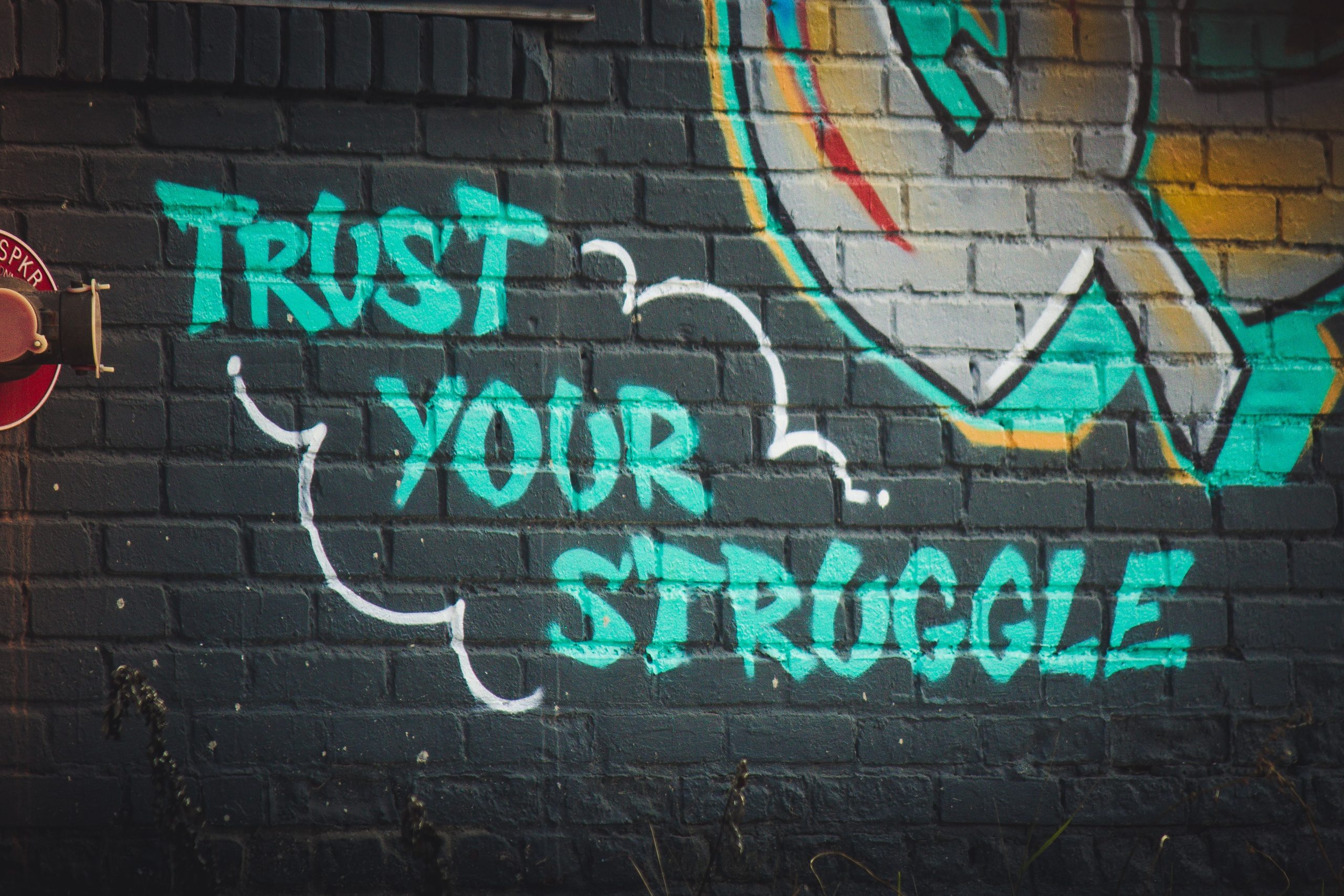
spray painted slogan "trust your struggle" against black brick wall

Trusting The Struggle

When the writing fights back…

It’s not writer’s block that gets me. I always have words and stories! It’s when a particular story takes a hiatus unexpectedly that I find myself struggling.

What do I mean by “hiatus” you might ask? Well, let me tell you about what’s been happening lately and share some tips with you while I’m at it, in case this happens to you.

For me, stories come on their own time.

Some writers can push through blocks or pauses in the writing process. I am not one of them, and I don’t think that’s a healthy approach for me anyway. A pause is when the story stops rolling out of my brain and through my fingertips onto the screen for a short period. It isn’t the same as a block–where nothing will come and it feels like a scramble to find any words at all–it’s more like needing to hit the pause button on a video while I take a bio or snack break. Except in this case I’m not the one hitting the pause button, it’s the story itself.

It’s like the story needs to gather itself together before we can go on telling it.

When the story is ready again, the words will start to flow as if nothing ever happened. It’s pretty magical, honestly. I’ve talked before about how my characters come to me already fully realized and with their own personalities and agendas. I don’t have control over them, I swear. They bust in and do what they want! The stories themselves are much the same way. I control how the words come out, and I have plot ideas and places I want the characters to go. But once things start, I often feel like I’m along for the ride while the story spills out with no regard to what I planned on or wanted.

[Yes, realistically I know that I’m responsible for the whole shebang. I’m not channeling some great Spirit of Storytelling or something. Or am I?]

So what to do when this happens?

The truth of it for me is that I can’t force the writing. That just pisses me off because nothing comes out right. I’ll just end up ditching all of it. But I can work on other things in the meantime. What that means is that my brain is still engaging with my creative centers, and I can let the other story sit in the background and marinate in possibility until it’s ready to re-engage with me.

What that means is that I’ve had TWO stories I’ve been working on. The secondary one is just for me right now; I may or may not release it to the public at some point. I’m just writing it for the sheer joy of interacting with the characters and the plot. That’s what I mean when I say I’m not blocked, by the way. I have no end of tales to tell and words to string together.

Other ways I handle a pause in a story flow:

  • immerse myself in another different creative activity
  • do something physical like dancing or walking
  • work on social media and blog posts
  • go on an Artist’s Date *
  • take a break and pamper myself for a few days

In my current case, the break has been for an extended time, so I’ve indulged in several of these tactics!

The biggest piece of advice I can offer is try not to panic. I know that it can feel scary and overwhelming to have your writing just shut off like that, but trust the struggle and your skills and know that this is a learning process as a writer. Stories can have their own schedule and not everyone can force themselves through a lapse in writing. It’s okay. You’ll get to the other side.

I linked to it above, but I can’t recommend The Artist’s Way by Julia Cameron * enough for times like this. She’ll give you even better tools and advice than I just did!

Psst – did you notice that the working title for the WIP is A Third Kind of Madness? You can follow my progress by watching my updates bar in the sidebar of the main blog page! ➡️

*Some of the links in this post are affiliate links. This means if you click on the link and purchase the item, I will receive an affiliate commission at no extra cost to you.
a small ghost pipe plant, centered in frame, with the text "some fragile woodland species" overlaid at the top

Some Fragile Woodland Species

It’s one of my well-known quantities as both a writer and a human that I’m extremely transparent and unafraid to share my struggles and joys. Yesterday, that showed up in a small piece of writing that I shared on my Facebook personal page.

After I posted it, and I re-read it a few times as I responded to comments, I decided that I really liked it. It does a good job of describing how I see myself, and how I’m often conflicted by opposing desires: to soar, and to go to ground.


There are people who revel in ordinariness, in walking in step with the crowd, in fitting in perfectly - or at least trying their best to do so. They take comfort in it, and stepping outside of their concept of what's normal would make them very uncomfortable. 
They actively flourish in that role, and it is home for them. 

There are others who seem destined to stand out, to innovate or ground-break, to inspire. They feel confined when held to an ordinary life, however that is defined by them. They dream of leaving a mark, a legacy, a story that can never be forgotten. 

And then there are people like me.

I want to fly a little closer to the sky, but not so high that my hubris sends me crashing to the ground. I want to leave something of importance, but it doesn't have to be grandiose and life-changing for millions. 
I'm not meant to be a superstar - I'm not that kind of smart or clever, I'm not the kind of beauty that sends men to war over me [thank goodness for that], and I don't have power or money that I could use to change the world. 
But... I don't know how to move through the ordinary world, either. I wish sometimes that I did, that I could be content there, but it doesn't work well for me. 
I'm like some fragile woodland species, the kind that you find when you move the leaves around on the forest floor. Not showy, but still interesting. The ecosystem won't collapse if you take me home, but you probably still shouldn't uproot me. 
I know, the metaphor's getting weird. That's also appropriate.

Anyway, none of those roles are inherently better or worse than the other. I just have always wanted more, but I don't seem very adept at succeeding in creating my own level between these others. I keep doing my own thing, hoping that at some point a curious hiker will wander from the path and lift the undergrowth to discover that I've been hiding under the leaves all along.

Becoming an author is an exercise in hope.

You write the words, and craft the story, trusting that it will be good enough to share with the world. You have to believe so strongly that your writing is Good Enough, Relevant Enough, Meaningful Enough. You give your time and energy and sleep and dreams to this work. Oh, and don’t forget your money, so much money is needed to create the book, and get it in front of potential readers. Editing, layout, cover art, advertising, and all the other little details.

It’s a wonder that any books get written at all.

The hope keeps us going. We write–late at night, at lunch, early in the morning–piling words and imagery like a treasure hoard. We scour websites for tips on how to market ourselves better, and send pitches with our fingers crossed. And we read the books that made it, from our colleagues and contemporaries and classic authors, and let their words and worlds inspire us. We look at their success and think, “Maybe one day, it’ll be me.”

And we never stop writing. We can’t. The words never stop coming.

We live on hope.