Yearly Archives: 2024

29 posts

If hope is a taste, what is yours?

There’s been a lot going on. I won’t lie, I’m exhausted – but I’m also happy with how the past few weeks have been going. I’ve already talked a bit about Balticon and I just got finished with the Nebula Conference – I took part in panels at both events but as always there’s so many other fantastic discussions that happen at them and it’s a privilege to get to be in the same room, whether in person or virtually.

One thing I deeply enjoy at the Nebulas is the virtual breakout rooms they offer for online participants. I’ve had fantastic conversations there every year that I’ve attended [since 2021!] and I’ve connected with delightful folks. I think that I’ve said this before, but it bears repeating: attending the Nebula Conference as a new writer was one of the best decisions I could have made, and I get more from that event, career-wise, than I do any other. It’s an excellent place to build a network and to learn from others who are in every stage of their writing career. You rub shoulders indiscriminately with writers on all levels, and the atmosphere is one of mutual support and sharing.

I firmly believe that I wouldn’t have achieved the level of Associate SFWA member this soon without the things that I learned and the connections I made at the Nebula Conferences I attended.

The only drawback from attending events…

The exhaustion is real, y’all.

Sometimes I can almost forget that I’ve got Crohn’s. Yes, I spend an unreasonable amount of time in bathrooms or thinking about where bathrooms are in case I need to be in one – but it’s been less of a burden lately, thanks to good planning. The brain fog, though. And the exhaustion. And weakness.

I hate all of those things so, so much. They’re the reminders that never actually let me forget about my IBD. I’ve learned to manage them well or at least work around them when I attend events, but the cost is my brain and body power for a while after the event is over.

I’m writing this blog post in pieces, using up my concentration then letting it slowly recharge until I’m capable of coherent thought again, in a carefully controlled cycle. If I wasn’t so tired, I would be unstoppable; my head is full of new ideas and concepts I want to explore and share, especially after interacting with other creative folk.

But my illness won’t let me. Not yet.
That’s the tradeoff. I can go to these events and be social and learn things and speak on panels about things I already know – or I can stay away and spill my thoughts on a page or screen. Like anything, it takes a careful balance.

And of course, the world is currently in turmoil and there’s rising fascism and ongoing genocide and people’s rights being taken away indiscriminately and that all tears at me, small and useless-feeling in the face of all that evil.

Right now I’m dying to share deeper thoughts, but I’ve got blog post concentration levels only. What can you do?
Well, in my case I will continue to slowly work at putting my words together, here and other places. I’ll scrape up the small amount of money that I have to contribute to mutual aid and organizations that have been proven to take action and assist the people who need it more. I’ll keep pestering my congresspeople, reps, and local politicians to enact change and stand against those who want to take away the rights of the less privileged and powerful.

I can only work in small increments. But I still can be useful. I still can flex the tiny power that I have for good.

Oh, tell me that dark could never win the light
Oh, tell me that wrong could never win the right
Baby, tell me that we gon’ some day stop the fight
And tell me that every, everything gon’ be alright

RM & Wale, Change

Title and quote from RM & Wale’s Change, a thoughtful and politically-minded song that came out in 2017 and is still relevant now.

Where to See Me Next!

Making It: What Handcrafts Can Teach Us About Writing

‘ll be joining Ann LeBlanc, Nicole Wolverton, Mar Vincent, & Eva Elasigue TOMORROW, June 9th, for this virtual discussion on what handcrafts can teach us about writing at the 2024 Nebula Conference.
From the panel description:

Many writers practice some kind of hand-craft, from fiber arts to woodworking to metalsmithing and numerous others. The panelists will share what lessons translate from creating physical objects to telling stories (and perhaps vice-versa!) as well as other benefits a craft hobby can provide to writers.

You can find out more at https://events.sfwa.org/

Next week I’ll be taking part in Storycrafting Sessions: Editing, hosted by Weeknight Writers on June 15th 2024.

What is Storycrafting Sessions: Editing?

It’s a free-first one-day virtual conference all about the editing process! We’ve got five incredible panels lined up for you (all times are EST):

11AM – 12PM Getting the Big Picture: Demystifying Developmental Editing

12:30 – 1:30PM Tips and Tricks for Self Editing

2 – 3PM How to Refine Your Narrative Voice

3:30 – 4:30PM How to Stay Focused: Editing for The Fifth (or 15th) Time ๐ŸŒŸ

5 – 6PM Bridging the Gap: How to Know When Youโ€™re Done Editing and What to Do Next

๐ŸŒŸ This is the one I’ll be on!

What does free-first mean?

Free-first means you can attend this event for free! Free tickets are available for all panels. This is part of our efforts to make educational resources and support available to ALL authors, especially working-class and poor authors.

However, a lot of work goes into these events – in fact, Storycrafting Sessions are our most labor-intensive events to create. So we offer Supporter Tickets for folks who want to pay us for the time and energy we put into these events.

Supporter Tickets also come with some benefits! To learn more and sign up, you can go here – https://ko-fi.com/post/Storycrafting-Sessions-Editing-FULL-SCHEDULE-K3K6XX5ZQ

I hope that I’ll see you at one or both of these panels! I am very excited to be taking part of both of these fantastic events.

Magic All Around: Patio Edition

I’m finally back with a new episode of Magic All Around, filmed in my lovely patio space on a gorgeous day. In this episode, I talk about What I’ve been up to lately – A Third Kind of Madness and Balticon, of course – and some of the things I do to keep grounded. I also ask YOU a question, and there’s a poll below for you to answer if you’d like!

You can choose how and where you’d like to watch or listen:

If you prefer the audio edition, it’s here!

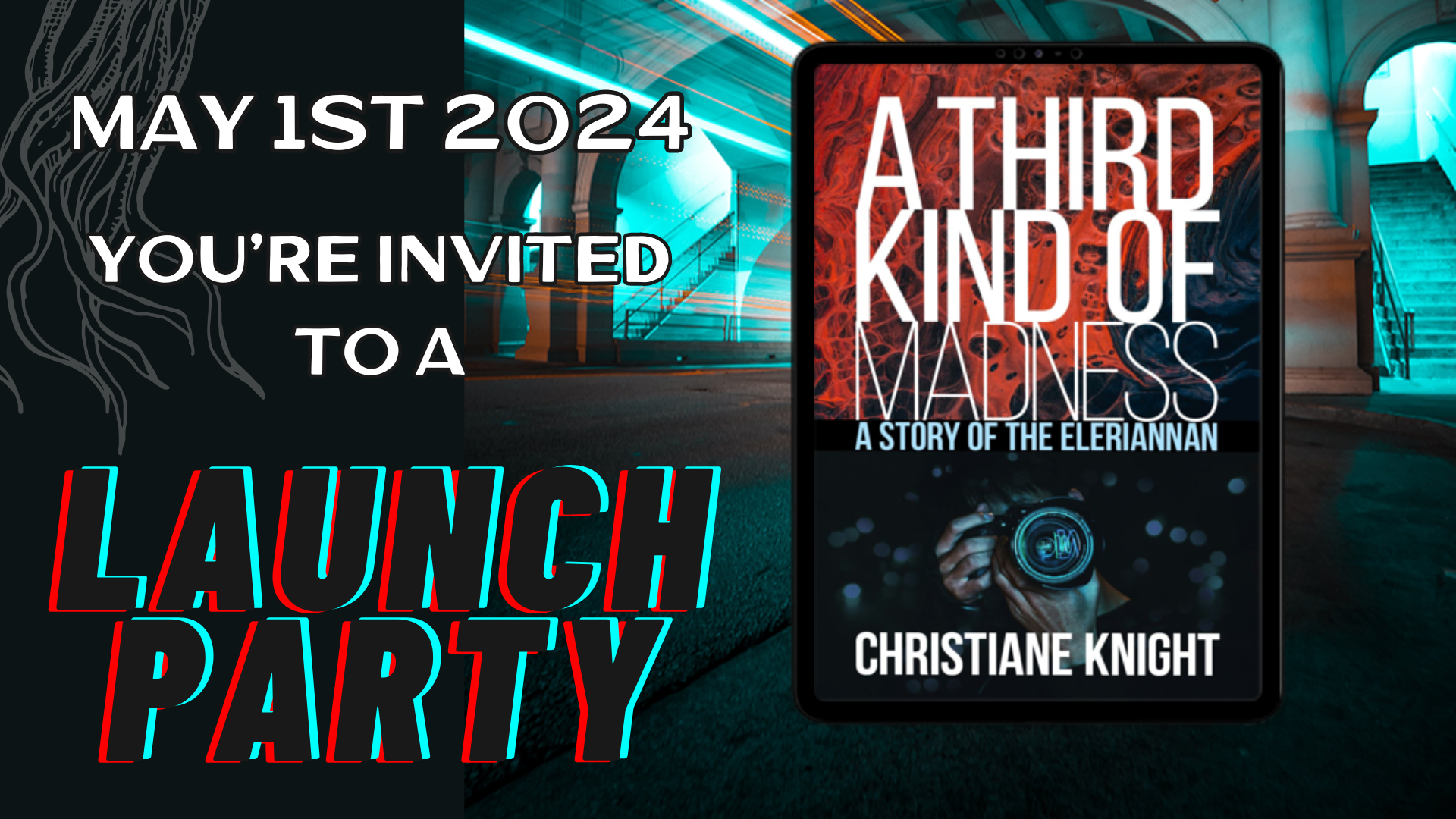
A Third Kind of Madness Launch Party Replay

Did you miss my launch party on May 1st? I’ve got the recording up on YouTube, finally! You can see me babble about the plot and new characters in the story, as well as the ones you know and love. I also discuss what inspired the title and concept and I promise you won’t guess what it is.
You’ll learn more about the soundtrack and best of all – I read a selection from the new book!

You can watch it here or on my YouTube channel. โฌ‡๏ธ

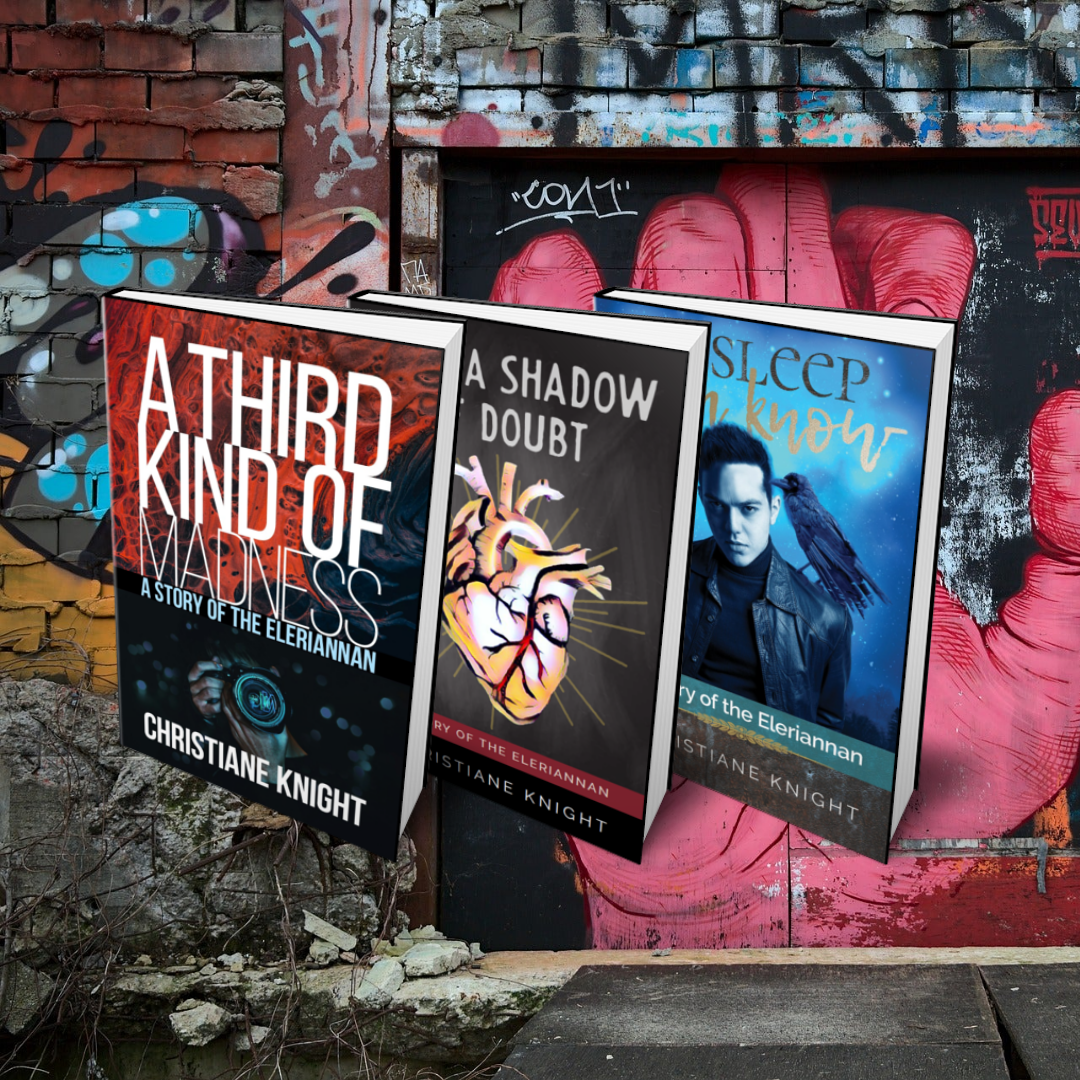
Three book covers against a graffiti backdrop

Seven Things About What I Write

For no reason except that I like to talk about my characters, settings, and themes, I’ve put together this [hardly exhaustive] list of things you can find in my stories.

Look, it’s a list!

  1. My stories center around Baltimore.
    Why? Because I’m from here. The city and its surroundings are a place filled with beauty and quirkiness that are often ignored in favor of focusing on the darker aspects, ones that get a disproportionate amount of screen time on TV shows and in movies. Those things are there, but it’s not all there is to Baltimore by far, and part of my goal is to rebalance things by telling hopeful stories set in a place that deserves them. Also, B’more has so many hidden treasures and interesting people. It’s the perfect place for a community of Fae to live without much notice.
    Most of the places I mention in my books are real places, or based on real ones. I’m planning a video tour of Fae Baltimore at some point soon!
  2. My stories are hopeful. As I mentioned above, I write books where the characters – no matter what they’ve been through – tend to work toward positive change and helping each other. There’s room for forgiveness and transformation here, something that reflects my own stance on life but also serves as an option for folks who are tired of the preponderance of grim, heavy stories out there and want something that encourages them to look at the world with fresh eyes. I don’t shy away from tough and painful topics, but I address them with small, positive steps that anyone – not just magic wielders – can take.
    It’s important for me to allow room for things like the possibility of redemption and the importance of community in these stories.
  3. My Fae characters are not inexplicable or confounding. In a lot of Faerie lore, the Fae are unpredictable, impossible to understand, without rhyme or reason to us mere mortals. In my stories, that’s not the case, or at least, not exactly the case,
    The closer that the Eleriannan and Gwyliannan live to mortals, the more they seem to be like us, with concerns and motivations that mortals can comprehend. The ones that are more difficult to parse are the older ones who have begun to separate themselves from the mortal world. And of course, there are beings like the Elementals, which not even the Fae can claim to understand.
    But one of the parts I love the most about writing my Fae is that despite being magical creatures who have lived well beyond the life span of the mortals they associate with now, they still struggle with emotions and relationships and maneuvering through the world around them. The magic they have solves some problems and creates others. They make plenty of mistakes, and also beneficial decisions. They are knowable – and loveable – because despite not being like us, they really are like us in all the ways that count.
  4. My characters care about taking care of the people and environment around them. There are plenty of social and environmental issues that are important to Baltimore that the characters address on a regular basis. Homelessness, racism, gentrification, pollution, poverty, environmental responsibility, justice, healthcare, class, and inequality are just some of the topics that characters touch on.
    They model helpful actions, too – especially Vali, an activist who puts her energy into using her magic to protect community projects and organizing cleanup sessions at the local waterways. The Gwyliannan contribute to their area by magically protecting the neighborhood from crime and other intrusions.
    I want to leave readers feeling like they can do more if they want and there’s a place for them out there with others who work towards positive goals.
  5. I like to refer to Faerie tropes and give quiet shout-outs to stories that came before mine. I bury references to all the lore, ballads, poems, and classic literature about the Fae that I grew up with, as well as nods to works by more contemporary authors that I’ve loved, throughout my stories. Sometimes it’s very subtle, other times quite overt if you’re familiar. It’s both a tribute and a way of connecting my tales to the bigger collection of lore out there. Also, it’s fun!
  6. I make up my own creatures and lore. Eleriannan, Gwyliannan, and Grimshaw. The Lady of the City. The Nyxen, Ffyn, Arswyd, ArDonnath. Those all came from my own head, though of course with plenty of precedent from the classics mentioned previously. I feel like a thread of truth runs through every interpretation of various magical beings and creatures, and mine are just one version of things that can feel both unique and familiar all at once.
  7. My characters are a little too real! I’ve been told time and again that they feel like people that my readers know and love like old friends. And to be truthful, they feel like that to me, too, even the new ones that show up unbidden to take over my stories. [I’m looking at you, Denny.]
    I’m often asked if they’re modeled after people I know and the answer is both yes and no. Certain people definitely had some influence over the beginnings of some of the folks in my stories, but once I started writing them they began to get minds and wills of their own and often will surprise me with some of the choices and directions they take.
    It’s quite delightful.
    Because of that, they get deeper and more complicated as the books progress, and that makes them much more interesting to work with. They show up in my dreams as often as they do on the page, and I’m fully expecting to round a corner one day and run headfirst into Lucee or Merrick or Denny.

There’s actually a lot more I could say about what I write – and why – but I’ll leave it at seven for now. What’s most important is that these books are intensely personal to me, and filled with details that I feel good about. I hope you enjoy them too.

Representation isn’t a bunch of boxes to check

When people ask me about my books and characters, they* sometimes talk about representation. “Why did you choose Merrick [my first book’s MC] to be a white guy from an obviously well-off family, but Lucee [second book’s MC] is a Black woman? You’re not either of these things.”
[*this is usually other white people asking me this, right]

Well, yeah. I don’t have to be represented by any of my characters in order to write about them and their lived experiences.

Being a writer requires a lot of skills. Some of the most important, in my opinion, have to do with empathy and understanding how people and society works. You can have an amazingly tight and engaging plot, but if you don’t write your characters well, the story will fall flat.

No one would blink if I wrote all my protagonists as white straight women. Even if they were substantially younger or older than me, more or less attractive, smarter or duller, or came from a very different socio-economic background – people wouldn’t comment or question it.

But the thing is, the world doesn’t just look like me. [despite some people constantly defaulting to white as the standard]

Representation isn’t a bunch of boxes to check off. Diversity isn’t something you add because you’re “supposed to.” It should be the standard, because that’s what the world looks like – especially if you’re someone who looks like me, a “standard” that came from an unbalanced worldview built on privilege and racism. The default isn’t white. Nor is it able-bodied, neurotypical, cisgendered, or heterosexual.

My characters, magical or not, represent the reality around them: people from different backgrounds, economic statuses, communities, and cultures, all living their everyday lives. Entangled, at odds or in love, working together or on opposite sides, Fae or mortal or something else – they all have a place in my stories, just as they do in the world outside of them.

What kind of writer would I be if I only focused on characters that looked like me, or had my lived experiences? Not a very interesting or realistic one, in my opinion.

Merrick is a white guy from an upper middle class family, smart enough but a bit spoiled, and able to live a directionless life because of that. It shapes why he makes the decisions that he does when he’s given the choice to be a part of something bigger, and gives us the opportunity to see him grow as a person.
Lucee is a Black woman who has leaned on her friendship with Merrick in the past as a kind of buffer between her overly controlling father and her own wishes for her life. She comes into her own power and ends up taking on a leadership role despite believing that she’s not good enough to do so. Her battle to overcome her low self-esteem is one I think a lot of people can relate to.
Denny struggles with deep self-worth issues and feeling comfortable in their own skin as a non-binary person. Because of this, they’ve allowed themself to be controlled by someone who wants to use them for their own benefit, and a good deal of their struggle is learning how to break free from that situation and mindset.

I think all these characters are relatable and bring different things to the table. That’s not even touching on Vali, who went through the foster system and was unhoused before coming to The Maithe, or Emmaline, a disabled woman with a debilitating chronic illness, or Aisling and Camlin, both Fae who faced rejection by their people for not being “pure” enough. Or Peri, who only wants to be valued for who she is, not what her powers can do for others.

I’ve known all these people. I want their stories in my world to be amplified. That’s why I write what I do.

[images are from Picrew and just for fun visualizations of the various characters]

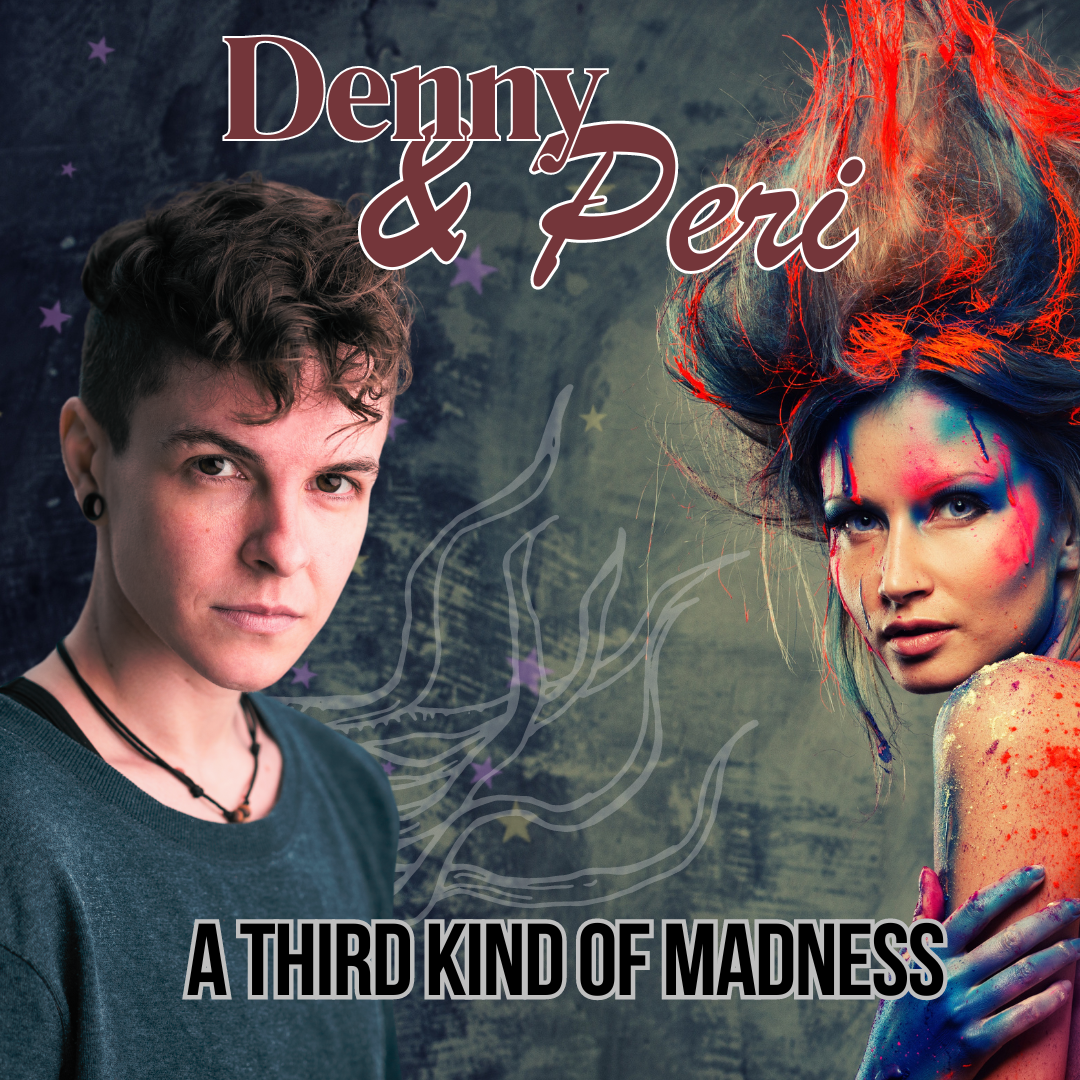
Meet the Characters: Denny and Peri

With A Third Kind of Madness due to be released on May 1st 2024, I thought it was high time to bring back the Meet The Characters series and introduce you to some of the new folk you’ll be getting to know in this story!

Denny is our main character and narrator: shy, unsure, talented but with self-esteem so low that they allow themselves to be bullied and used by the leader of their art collective in ways that keeps their personality and photography career in check. Denny describes themself as awkward and uncomfortable with who they are, and at the beginning of the story this is quite evident. With sandy, tousled hair, freckles, and a boyish, rumpled appearance, Denny tends to fade to the back and hide behind their ever-present camera.

Denny is a wistful character when we meet them. They are non-binary and desire to be seen as androgynous, but tend to wear clothes that allow them to blend into the background, something they are very good at. They hate where their life is going but seem unable to take steps to make changes or break away from the art collective they belong to and is holding them back. The only things they feel really strongly about are their photography, and going regularly to the local coffee shop, where their secret crush is a regular.

That crush is Peri, who is beautiful and bubbly in a way that fascinates Denny to the point that they’re almost obsessed with seeing her daily. Denny observes that Peri is thoughtful and coquettish in turn, but never expects to catch her attention.

Which is why they are shocked when Peri introduces herself one day, compliments Denny’s work, then asks them out on a date.

Peri establishes quickly that she moves in the art world and knows many artists, attending their shows and even owning some of their art. She’s pretty in a feminine and flirty way, often wearing dresses or blouses that show off a little of her skin. One of Peri’s biggest complaints is that she’s often forced to fill a manic pixie dream girl role in her relationships – people want her for what she can do for them, rather than what they can bring to each other.

This becomes a real issue later in the story…

That warmth takes over my entire body as I hurriedly flip to the next shot. I must have clicked too many times because I find myself staring at the moment that Peri and I kissed, captured forever in an awkward angle that only seems to add to the charm of the photo. Itโ€™s obvious that it was taken like a selfie, but somehow, that doesnโ€™t make the shot look amateurish. I guess that owes a lot toโ€”once againโ€”the crispness of focus in the photo. Printed out at the right size, it would look like you could reach into it and pull us out fully formed.
โ€œThis is exactly as I see you,โ€ Peri murmurs.
I realize that weโ€™re holding hands, and I have no idea when that happened. Sheโ€™s leaning against me, and I suddenly feel lightheaded.
Sheโ€™s right, though. I look in the image just like how I see myself in my head, how I want others to see me: a pretty femme boy, a handsome boyish girl, an androgyne so comfortable in their skin that they donโ€™t care about what anyone else thinks. I just am, in that moment. And that comfort, which is something quite new to meโ€”that was Periโ€™s doing. From the second Peri first spoke to me, she made it quite clear that she not only accepted who I am but also liked it. She liked me.

In the photo, all her attention is focused on me, not just her lips pressed to mine, but her hand on my face, her body turned in that cramped space to face me fully. Yet again, the sparkling energy is visible, but this time it seems to surround both of us and if I look at the image in the right way, Iโ€™d swear it was originating from the point where we were touching. I look at Peri, and I know my eyes must be filled with questions because she nods solemnly.

Meet the rest of theย charactersย in this ongoing series, thenย orderย the books now!

A book cover with the title A Third Kind of Madness on a red/blue/black background and a mysterious photographer under the text. Next to it is a manual camera, all on a black background.

Introducing: A Third Kind of Madness

Launching on May 1st 2024, the third installment in the Stories of the Eleriannan series – A Third Kind of Madness – is a tale about muses, ambition, possessiveness, consequences, and love.

Our protagonist Denny is self-described as boring and uncomfortable in their own skin, a quiet photographer who hides behind baggy men’s clothing and a camera and specializes in minimizing and doubting themself. Yet Denny is part of an art collective, and has done both solo shows and ones with their group, and would certainly be more successful if they didn’t allow the aggressively ambitious leader of the collective to push them around.

Denny has a crush on a regular at the Frisky Bean, the bubbly and attractive Peri. They spend their days stealing glances of her from across the room until one day Peri breaks the routine by introducing herself – then asking Denny for a dinner date. She suggests her place, which just happens to be at The Maithe.

What comes next? Greedy art [and artists], elementals with opinions, photographs that show more than is apparent to the eye, and the consequences of messing around with forces that aren’t understood – or freely given.

ATKOM is a little darker than my other books but still full of upbeat moments and Fae magic. Vali, Karsten, Cullen, and the folks in The Drawback are all back and joined by new characters both magical and mortal. And again some of my favorite places in Baltimore are featured as a backdrop to the action, because the city is one of my favorite characters.


โ€œI live in a city known for eccentricity. Baltimore is a vivid place, full of hidden magic. And yet here I am, quiet and unremarkable, and with no idea of how I got this way. Iโ€™d give a lot to have a touch of that magic in my life.โ€

Be careful what you wish for.

When Denny isnโ€™t working as a photographer, they spend their time at the local coffee shop mooning over one of the regulars, the mysterious and beautiful Peri. No oneโ€™s more surprised than Denny when she asks them out on a date.

What happens that night throws the couple into a world where nothing is as it appears and everyone wants to get their hands on Peri and her powers to inspire artists โ€“ especially Joolie, the controlling and egotistical leader of Dennyโ€™s art collective.

If that wasnโ€™t enough, the powerful, capricious water elementals known as Nyxen have inexplicably taken an interest in Denny. They warn that Periโ€™s gifts bring nothing but trouble to those around her. Itโ€™s hard to argue with them when the magic starts to go wrong; paintings greedily come alive with grasping tentacles, an obsessed ex-lover returns to threaten the couple, and Denny begins to wonder if their grip on reality is beginning to slipโ€ฆ


For readers who enjoy a list of tropes, you can expect: found family, sapphic romance, mysterious and definitely capricious water elementals, rock-and-roll Fae, the power of blood [compels you], photos and art with supernatural properties, muse abuse, and an anthropomorphized house – or is it?

A Third Kind of Madness signed paperback special bundles are available now for preorder, and the regular paperback and ePub will be for sale starting on May 1st 2024!

Expect more details about the launch party SOON!

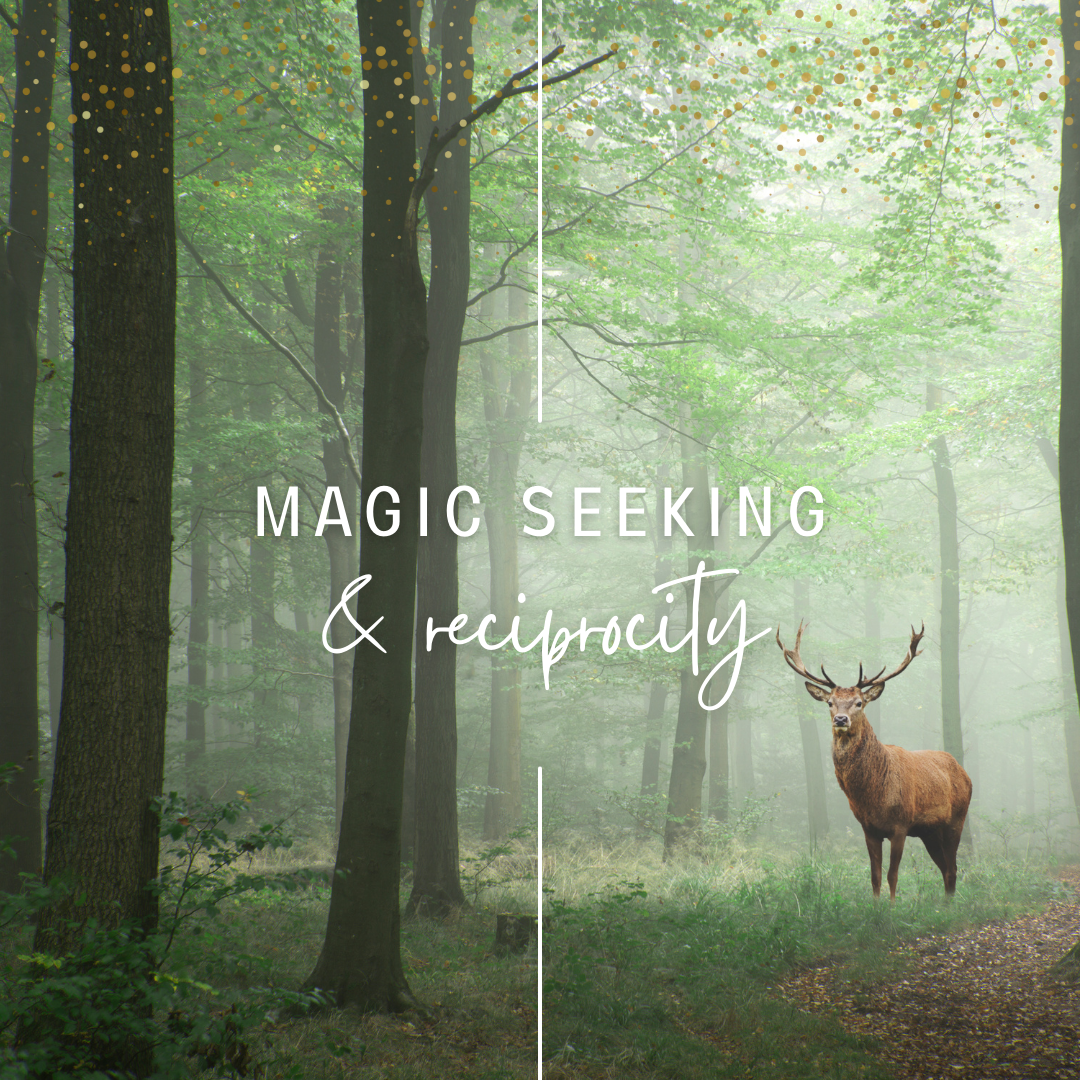
Magic Seeking and Reciprocity

A mutual exchange of energy and support can take many forms, from barter, to responding in kind to pleasant social advances like waving at each other, to a trade of ideas for products or monetary support. The last one is very different from capitalism, which is about power and using the labor of others to advance that power, rather than a trade that benefits both parties, like commerce.

Most creative types that sell their work are involved in commerce. I do it when I sell books or one of the cute story related items from my shop, and the money I bring in from that helps me make more items to sell and spread my stories to more people.

But unfortunately, it doesn’t pay my bills, which frankly sucks. That’s the dream job, of course, and it’s going to take a long time before that’s a possibility. Thing is, I love writing. Even more, I love the creativity that pours from me constantly n so many different ways. It’s the biggest gift I’ve received next to being given a chance to experience being a living being.

Here’s something that some people don’t realize: creativity is a gift, but it’s also a skill. You can be born with it, but you can also learn it. And even more important? The gift needs to be practiced and honed. The most innately talented person still benefits from regular practice of their skills.

What’s this got to do with Magic Seeking?

Magic Seeking is what I call the practice of mindfully paying attention in order to find the often-missed magical moments in the world. Usually it’s something small, and it can be natural or human-made, but I’ve found it to most often be a “blink and you’ve missed it” moment that only those who practice observance catch. One of my favorite personal examples is how when I take the train or light rail, I always spot wildlife like deer, beavers, or eagles. The other folks surrounding me miss them because they’re all looking at their phones instead of out the window. I make it a regular practice to watch the world whizz by instead of distracting myself, because now I’ve come to expect those magical moments. They light up a creative part of my brain that plugs that wonder and sense of possibility into the stories I create.

Magic Seeking involves deep dives, too. Asking myself questions about what I believe, how I feel, what parallels I can draw between instances in my life – they all help me clear away the crap that keeps me from accessing the magical parts of myself. Tapping into the more innocent, childlike aspects of myself is a lot easier when I’m not dwelling on the day to day weights that drag me down, and deep dives help to clear some of that away.

The biggest part of keeping creativity alive through Magic Seeking is actively looking for inspiration. That can be something as simple as a quote, poem, photo, or piece of art that sparks something inside us. Or we might find it through talking with other like-minded people – casual chat or brainstorming both can yield results. Inspiration is all about active sharing and letting the magic of what others have created speak to us about what we could bring forth in response.

I decided that the best way to have something I want in the world is to make it for myself, so I put my ideas together and came up with the Magic All Around community. Currently, the membership is just myself, but I’d really like to expand that to others who think this is something exciting and want it in their life, too.

I added a membership level on Ko-fi with this in mind, because although I’m doing it for me, sharing it with others takes work and time and I’d like to think that those things are worth something. [they are!] In exchange, there will be regular exclusive posts happening through Ko-fi, as well as a space on my Discord especially for Magic Seekers. Lots and lots of perks for members! I want it to be something precious to you. We do a trade and we both benefit: reciprocity.

Magic Seeking is a good fit for anyone who wants to embrace a slower, more focused way of looking at the world, especially – but not limited to – those who pursue artistic endeavours. Writers, visual artists, crafters and artisans, musicians, and more can all benefit from these exercises and techniques, as well as my focus on sustaining hope, embracing whimsy, and nurturing ourselves.

Want to learn more? I’ll give you the link and answer any questions you have! I post regularly on Ko-fi as is, so even if this doesn’t do it for you, you can also follow me and get all the non-membership content directly sent to your inbox.

Come with me, let’s go Magic Seeking!